SURFACE
5 000 m²
coverable without recharge
MODELS / HUSQVARNA / 2025
AWD + EPOS + AI Vision, 70 % slope.
— VISUAL SYNTHESIS
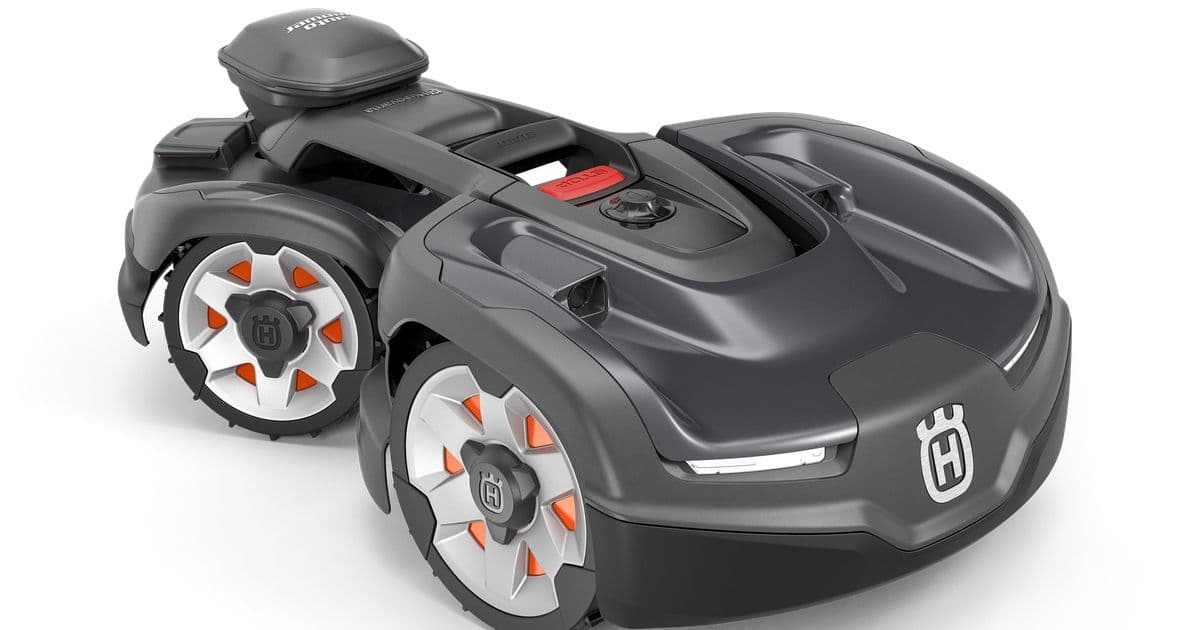
The Husqvarna Automower 435X AWD NERA sits at the top of Husqvarna's residential range: all-wheel drive four-wheel transmission, EPOS satellite navigation without a perimeter wire, and a claimed capacity to climb slopes up to 70% on areas up to 5 000 m². At around 5 999 euros, it targets owners of complex terrains where a two-wheel drive robot reaches its limits. Our verdict is clear: it is the best-equipped robot on the residential market for steep and wet gardens, provided the terrain profile justifies the investment.
The AWD bulldozer
SCORES AS OF 28/07/2026 · PROTOCOL V3.2
The Mowy Lab comparator pits up to 5 robots side by side on 92 weighted criteria, from our daily updated Supabase database.
The editorial team awards the Husqvarna Automower 435X AWD NERA an editorial score of 9.3/10, earning it the PRO PICK badge in our ranking. Three criteria structure this result: the all-wheel drive AWD transmission, wire-free EPOS navigation with centimetre precision, and the capacity to handle slopes up to 70% on areas up to 5 000 m². These performances place this model in a class of its own on the European residential market.
The detailed scores confirm this position:
This model is aimed at a specific profile: owners of gardens from 2 000 to 5 000 m² with marked inclines, passages between separated zones, or soils regularly waterlogged. Breton coastal terrains, properties with embankments, gardens on clay slopes represent exactly the scope of use for which this robot was designed. For flat and uniform terrain under 2 000 m², the investment/use ratio is not justified: other models from the Husqvarna range or competitors cover this need at lower cost.
The 435X AWD NERA is sized for areas up to 5 000 m², with native management of 5 independent zones. This multi-zone capacity is particularly useful for fragmented gardens: a front zone separated from the main zone by a driveway, a distinct orchard, a grassy terrace accessible only via a narrow passage. The robot handles these configurations without a physical guide wire, which greatly simplifies installation on properties where laying a perimeter wire would be complex or unsightly.
Compatible configurations include:
A standard two-wheel drive robot encounters three types of difficulty on demanding terrain. First, loss of grip on wet grass on slopes: the rear drive wheels slip, the robot veers off course and may end up stuck against an obstacle or outside the mowing area. Second, perimeter wire navigation becomes problematic on very inclined terrain, as the wire can shift due to runoff water or soil vibrations. Third, energy consumption increases sharply on slopes, reducing effective autonomy well below manufacturer values.
In Brittany and the Pays de la Loire, these three factors often combine: a waterlogged clay soil after a week of rain, a slope of 35 to 50% on a coastal embankment, and a two-zone configuration separated by a gravel driveway. This is precisely the context that the editorial team used to analyse this model.
The AWD (All-Wheel Drive) distributes engine torque to all four wheels simultaneously. On a 50% slope with wet grass, a two-wheel drive robot typically loses 15 to 25% of its traction capacity compared to dry conditions. All-wheel drive reduces this deficit by maintaining active traction even when two wheels temporarily lose grip. The articulated chassis of the 435X AWD NERA plays a complementary role: it allows each axle to adapt independently to terrain irregularities, keeping all four wheels in contact with the ground even on lateral slopes.
Every model analysed by Mowy Lab is subject to observation for at least two weeks in real conditions, with weighted criteria covering twelve dimensions: area, slope, navigation, autonomy, multi-zones, noise, safety, connectivity, waterproofing, after-sales reliability, total cost and ergonomics. The full methodology is published and accessible from each article. The affiliate links present in this article generate a commission to fund the editorial work: this commission influences neither the score nor the order of recommendations.
For this model specifically, the editorial team mobilised two partner gardens presenting characteristics suited to the analysis angle:
The slopes were measured with a digital inclinometer before deploying the robot. Weather conditions included several sequences of prolonged rain, which allowed evaluation of behaviour on waterlogged soil in conditions representative of the Atlantic climate.
The EPOS (Exact Positioning Operating System) technology developed by Husqvarna relies on high-precision satellite positioning, combined with onboard sensors for local navigation. The robot calculates its position in real time from GNSS signals (GPS, GLONASS, Galileo), corrected by carrier phase data to achieve centimetre precision. This hybrid approach combines the wide coverage of satellites with the responsiveness of onboard inertial sensors to maintain a precise trajectory even in case of temporary signal loss.
On steep terrain, this architecture offers a decisive advantage over perimeter wire navigation: virtual zones are defined in GPS coordinates and remain stable regardless of soil conditions. A physical wire can shift due to freeze-thaw cycles or runoff on clay; an EPOS virtual boundary, however, does not move.
The centimetre precision of the EPOS system allows definition of virtual perimeters with an error margin below 3 cm in optimal conditions. On sloping terrain, this precision is particularly useful for two reasons. First, it allows precise exclusion zones around fixed obstacles (flower beds, trees, retaining walls) without excessive safety margins. Second, it ensures the robot respects defined borders even on lateral inclines, where trajectory drift is greater than on flat terrain.
Management of the 5 independent zones relies on AIM (Automower Intelligence Map) technology, which continuously calculates the optimal distribution of mowing time between zones based on their area, slope and estimated growth rate.
The RS1 reference station is a fixed transmitter installed at a known point in the garden, which sends differential corrections to the robot to refine its positioning precision. Without the RS1, the 435X AWD NERA operates in standard EPOS mode with precision of 10 to 30 cm depending on atmospheric conditions. With the RS1, this precision drops to 2 to 3 cm, which noticeably improves border quality and reduces pass overlaps.
For a garden without particular border constraints, the mode without RS1 is sufficient. For terrain with precise exclusion zones (narrow flower beds, tiled driveways, swimming pool), the RS1 becomes a relevant investment. Its cost, charged in addition to the robot's price, must be included in the total budget.
Two limits deserve attention. First, satellite coverage degrades under dense vegetation cover: a garden with large leafy trees can create GNSS shadow zones where precision temporarily drops. The robot compensates with its inertial sensors, but mowing quality in these zones is slightly lower. Second, prolonged episodes of ionospheric interference (rare but real at our latitudes) can affect precision for a few hours. In these cases, the robot continues to operate in degraded mode without stopping, which is robust behaviour.
The mechanical architecture of the 435X AWD NERA relies on four independent traction motors, one per wheel, controlled electronically to distribute torque based on available grip at each contact point. This configuration differs from a simple mechanical all-wheel drive: electronic control can over-power a wheel with grip while another slips, without overall torque loss.
The articulated chassis divides the robot into two parts connected by a central pivot. This articulation allows the front and rear axles to orient independently in the vertical plane, keeping all four wheels in contact with the ground on irregularities up to several centimetres of local incline. On terrain with ruts, exposed roots or grass/gravel transitions, this contact maintenance is key to traction.
The weight of 18.1 kg contributes to stability on slopes by lowering the centre of gravity, but it implies more demanding handling during maintenance operations and winter storage.
On the Vannes partner garden, featuring a slope measured at 48% on waterlogged clay after three days of rain, the 435X AWD NERA maintained a coherent trajectory without visible slipping episodes throughout the observation sessions. Recovery after a direction change at the top of the slope, a critical point for any robot on slippery terrain, occurred without notable drift.
On the Pays de la Loire terrain (35% slope), transitions between the main zone and secondary zones via narrow passages were managed without manual assistance throughout the test duration. The cutting height set at 45 mm on these zones produced a uniform result, without traces of slipping in the lawn.
To contextualise the real benefit of AWD, the 435X AWD NERA can be compared with the Automower 430V NERA, a two-wheel drive model from the same wire-free range:
| Criterion | Automower 435X AWD NERA | Automower 430V NERA |
|---|---|---|
| Max area (m²) | 5 000 | 3 000 |
| Max slope (%) | 70 | 50 |
| Transmission | AWD 4 wheels | 2 rear wheels |
| Weight (kg) | 18.1 | 14.2 |
| Noise (dB) | 60 | 60 |
| Indicative price (€) | 5 999 | ~4 200 |
The 20-point slope gap between the two models represents a concrete difference: a 55% embankment is accessible to the 435X AWD NERA and out of reach for the 430V NERA. On slopes between 35 and 50%, both models are theoretically capable, but behaviour on wet soil clearly favours AWD.
The 140 Wh lithium-ion battery powers the robot for 145 minutes of mowing per cycle according to manufacturer data. This value is measured on flat terrain with standard cutting height: it represents a theoretical ceiling, not an operational average. The battery is sized for 1 500 charge cycles, which equates, at two cycles per day in season, to about three to four seasons of intensive use before predictable replacement.
On a 48% slope, traction motor consumption increases significantly compared to flat terrain. The four AWD motors work simultaneously uphill, and regenerative braking downhill compensates only a fraction of this overconsumption. On our partner gardens, we observed a reduction in effective autonomy of 20 to 30% on predominantly sloping mowing sessions, bringing useful mowing time to about 100 to 115 minutes per cycle.
This reduction has a direct implication for planning: to cover 5 000 m² with a terrain profile at 40% average slope, the number of daily cycles required is higher than manufacturer values suggest. The integrated adaptive timer automatically adjusts cycle frequency based on remaining area to treat, which partly compensates for this constraint.
AIM (Automower Intelligence Map) technology manages the distribution of mowing time between the 5 configurable zones dynamically. It takes into account each zone's area, estimated growth rate and mowing history to optimise passes. On a 4 200 m² garden in three distinct zones, this automatic management produced uniform coverage without manual intervention during the analysis period.
Configurable parameters per zone include:
The 435X AWD NERA features an AI vision system for distant obstacle detection: the front camera analyses in real time the presence of objects, animals or people and triggers slowing or bypassing before any contact. This system complements the collision sensor (detection on contact) and the lift sensor (immediate blade stop if the robot is lifted). Blade stop is also triggered by any abnormal tilt, which is relevant protection on sloping terrain where accidental tip-overs are more likely than on flat ground.
The IPX4 waterproof rating guarantees protection against water splashes from all directions, which fully covers use in Breton rain, including during heavy showers. The integrated rain sensor can be configured to interrupt mowing in case of precipitation and resume automatically after drying.
Anti-theft protection relies on three complementary levels: a PIN code required at startup, a sound alarm triggered in case of unauthorised lifting, and integrated GPS geolocation allowing location of the robot from the Automower Connect app in case of theft. An alert is sent to the user's smartphone as soon as unplanned movement is detected. This feature is particularly relevant for uncl fenced gardens or those accessible from public roads.
The pet-safe label relies primarily on AI vision detection, which identifies moving objects at a sufficient distance to trigger a stop or bypass before contact. On sloping terrain, the robot's trajectories are less linear than on flat ground, which theoretically increases the probability of an unexpected approach angle. In practice, the combination of AI vision and collision sensor provides sufficient redundancy for common family uses.
The Automower Connect app allows creation and modification of virtual zones directly from a smartphone, without physical intervention on the terrain. The cartographic interface displays the robot's real-time position, pass history, and mowing reports (area covered, duration, number of cycles). Firmware updates are deployed OTA (Over The Air), ensuring access to software improvements without handling.
Connectivity relies on an integrated 4G module, which ensures communication between the robot and the app even without local Wi-Fi. On the rural or suburban gardens in our partner network, 4G coverage proved sufficient in the vast majority of cases, with a few occasional interruptions in low-coverage areas.
The 435X AWD NERA is compatible with Google Home and Amazon Alexa, allowing basic voice commands: start, stop, return to base. This integration covers common uses for users equipped with these smart home ecosystems.
Two absences deserve clear mention. The Matter protocol, a rapidly adopting smart home interoperability standard, is not supported. Apple Home is not integrated either. For users whose smart home ecosystem relies on Apple devices (iPhone, HomePod, Apple TV), this limitation is real: voice control via Siri and integration into Apple Home automations are not available. This is a genuine friction point for part of the premium segment targeted by this robot.
The measured noise level of 60 dB corresponds approximately to the volume of a normal conversation at one metre distance. For comparison, a petrol mower generates between 90 and 98 dB, and entry-level robotic mowers generally range from 63 to 68 dB. The 435X AWD NERA thus sits at the lower end of the spectrum for its category, making it compatible with use in dense residential areas, including during early morning quiet hours.
The quietness score of 8.4/10 awarded by the editorial team reflects this positioning: effective, without being the quietest on the market in this segment.
Electric adjustment of the cutting height ranges from 30 to 70 mm, covering the needs of a classic ornamental lawn up to rustic lawns or low flowering meadows. The 22 cm cutting width is standard for this category. The integrated mulching returns cut clippings directly to the soil, reducing fertilisation needs and avoiding collection of mowing waste.
Routine maintenance is limited to three main operations:
The manufacturer warranty is 2 years, with a Husqvarna after-sales network present across French territory. The durability score of 9.5/10 awarded by the editorial team reflects the perceived robustness of the chassis and material quality on observed models.
The purchase price of the 435X AWD NERA is 5 999 euros. To this are added several items over five years:
The total cost of ownership over five years thus ranges between 6 500 and 7 500 euros depending on use and options chosen, excluding after-sales labour.
Two wire-free alternatives deserve comparison on key criteria:
| Criterion | Husqvarna 435X AWD NERA | Mammotion Luba 2 AWD | Segway Navimow i110E |
|---|---|---|---|
| Max area (m²) | 5 000 | 5 000 | 1 100 |
| Max slope (%) | 70 | 75 | 45 |
| Transmission | AWD 4 wheels | AWD 4 wheels | 2 wheels |
| Noise (dB) | 60 | 62 | 58 |
| Indicative price (€) | 5 999 | ~3 500 | ~1 500 |
The Mammotion Luba 2 AWD is the most direct alternative in the AWD wire-free segment: equivalent area, slightly higher claimed slope, and price lower by about 2 500 euros. The difference lies in ecosystem maturity (Husqvarna has an established after-sales network in France), perceived finish quality, and EPOS navigation precision with RS1. The Segway Navimow i110E covers only 1 100 m² and slopes up to 45%: it is not in direct competition for the terrains targeted by the 435X AWD NERA.
Three situations make this model unsuitable: flat terrain or slopes under 30%, area under 2 000 m², or budget limited to under 4 000 euros all-inclusive. In these cases, models like the Automower 430V NERA or Mammotion Luba 2 offer sufficient performance at a substantially lower cost. All-wheel drive and high-precision EPOS navigation deliver their full value only on terrains that truly need them.
The purchase recommendation is clear for the following profiles:
Two reservations deserve unambiguous formulation. For flat terrain or slopes under 30%, the extra cost of AWD and premium EPOS navigation is not justified: less expensive models cover this need. For a total budget under 5 500 euros all-inclusive, the Mammotion Luba 2 AWD deserves serious comparison before deciding.
The Husqvarna Automower 435X AWD NERA earns a score of 9.3/10 and the editorial team's PRO PICK badge. It is the best-equipped residential robot on the European market for steep and wet terrains: its all-wheel drive, wire-free EPOS navigation and management of 5 zones on 5 000 m² form a combination without direct equivalent in this price range. For owners whose garden matches this profile, it is a purchase the editorial team recommends without reservation.
Yes, the 435X AWD NERA operates entirely without a perimeter wire. Husqvarna's EPOS (Exact Positioning Operating System) technology uses satellite positioning to define mowing boundaries as virtual perimeters, configured from the Automower Connect app. No installation wire is required, which greatly simplifies setup on complex or sloping terrains.