MOWY·LAB
Which mower to pick?CompareReviewsTop 10Guides
MOWY·LAB

The mowy Letter

One email a month. New analyses, critical firmware alerts, pre-season deals. One-click unsubscribe.

mowy-lab

  • Compare
  • Reviews
  • Top 10
  • Guides

Legal

  • Legal notice
  • Privacy
  • Contact
© 2026 mowy-lab — independent garden robot reviewsBerlin · Lyon · Madrid
Complete guide · Mowy Lab

Which robotic mower to choose in 2026? The Mowy Lab method, from criteria to verdict.

The 2026 market has shifted toward wire-free navigation and doubled the quality gaps between price tiers. The Mowy Lab newsroom provides here its complete method: six criteria, an interactive profiler, a selection by garden profile and the FAQ that answers the eleven questions you ask us most often.

Updated on April 30, 2026Test bench Vannes, Bretagne
a bench in a park
Photo Krišjānis Kazaks · Unsplash
30-second verdict

Six profiles, six answers. Find yours, then scroll down for the complete method.

Standard flat garden under 800 m²
Compact wired or entry-level RTK

The price-to-reliability ratio remains unbeatable around 700 to 900 €.

Family garden 800 to 1,500 m²
Mid-range RTK

Native multi-zone coverage and installation in less than 30 minutes.

Slope greater than 35 %
Certified AWD model

All-wheel drive makes the difference under 1,800 €.

Over 3,000 m²
High-end large-capacity RTK

Autonomy greater than 180 minutes per cycle, multi-zone.

Multi-zone and obstacles
LiDAR or AI vision

Real-time 3D mapping, essential under dense canopy.

Less than 300 m²
Wired or compact RTK under 600 €

The added cost of a wire-free model is rarely justified at this scale.

This grid is only intended to provide direction. The precise selection of a model is made after the profiler below, which cross-references your actual six criteria with the Mowy Lab panel.

01 · The method

How to choose: the Mowy Lab method in six criteria

Six criteria structure every serious decision. Evaluating them in this order avoids the most common mistake in the 2026 market: choosing a robotic mower by its brand or design, rather than by its suitability to the terrain. The Mowy Lab newsroom applies this grid to every test since 2023.

Criterion 01

The actual surface, margin included

The surface announced by the manufacturer corresponds to an ideal terrain, flat, without obstacles, at full charge. Actual conditions differ. The Mowy Lab newsroom systematically applies a 20 % margin between the measured garden surface and the retained robotic mower capacity, a margin that rises to 30 % in humid climate or on dense grass.

  • Less than 300 m²: compact robotic mower between 250 and 1,000 m² announced
  • 300 to 800 m²: capacity of 800 to 1,500 m² advised
  • 800 to 1,500 m²: aim for 1,500 to 2,500 m²
  • 1,500 to 3,000 m²: 3,000 to 4,500 m² announced
  • Beyond: high-end, long autonomy mandatory
Criterion 02

The maximum slope, ten-point margin

A slope declared at 35 % by a manufacturer often corresponds to 30 % on loose soil or wet grass. All-wheel drive models, called AWD, climb up to 70 or 80 % and resolve very steep alpine or coastal terrains. Under 35 %, standard models suffice provided a ten-point margin is respected on the announced value.

  • Flat to gentle (under 20 %): all models in the panel
  • Rolling (20 to 35 %): wide studded wheels essential
  • Steep slope (35 to 55 %): all-wheel drive or reinforced drive wheels
  • Extreme slope (beyond 55 %): certified AWD only
Criterion 03

The terrain complexity

A garden is never a single surface. Narrow passages under 70 cm, zones separated by driveway or gate, fixed obstacles (beds, automatic watering, ponds) determine the choice as much as a raw surface. Native multi-zone management becomes essential as soon as two distinct plots coexist.

  • Single open zone: all models, wire included
  • Multiple separated zones: native multi-zone mandatory
  • Narrow passages under 70 cm: robotic mower width and mapping flexibility
  • Multi-zone plus narrow passages: LiDAR or AI vision recommended
Criterion 04

The navigation technology

Four technologies coexist in 2026 and each has its preferred terrain. The perimeter wire retains the most stable reliability on simple gardens. RTK offers centimeter precision on open surfaces. LiDAR maps at 360° without depending on satellites. AI vision recognizes obstacles and no-go zones by cameras. Several high-end models now combine the three in tri-fusion navigation.

  • Perimeter wire: proven reliability, long installation, ideal under 1,000 m²
  • RTK: satellite precision, quick installation, sensitive under dense canopy
  • LiDAR: independent of satellites, strong on wooded gardens
  • AI vision: recognizes obstacles and zones, subscription sometimes required
Criterion 05

The actual budget over eight years

The purchase price only tells part of the story. Over eight years of use, the newsroom observes that the battery is replaced once (200 to 400 € depending on the model), the blades three to four times (40 to 90 € each), and that electricity cost remains marginal (15 to 25 € per year). A premium model is justified when robustness or part availability avoids premature replacement.

  • Under 700 €: relevant only for simple garden under 500 m²
  • 700 to 1,200 €: the densest tier in the 2026 market
  • 1,200 to 2,000 €: comfortable RTK, entry-level AWD, multi-zone
  • Beyond 2,000 €: large surfaces, AI vision, extended warranty
Criterion 06

The secondary constraints

Noise, animal safety, anti-theft, waterproofing, connected ecosystem: these criteria do not overturn a selection but narrow the final list. On a shared garden, noise caps the choice under 62 dB. With animals or children, the lift sensor and ground-level AI vision become non-negotiable.

  • Close neighborhood: models under 62 dB, daytime programming
  • Animals or children: lift sensor, AI vision, protected blades
  • Theft risk: GPS tracking, SIM card, anti-removal lock
  • Humid climate: IPX5 rating minimum, optional shelter advised
Mowy Lab profiler · 6 criteria

Your garden profile, your recommended robotic mower.

Step 1 / 6
01What is the actual surface of your lawn?

The newsroom advises taking the measured surface, then aiming for a robotic mower covering at least 20 % more. A model announced at 1,000 m² tires beyond 800 m² actual in humid climate.

Sprinklers watering a green lawn at sunset.
Photo Alef Morais · Unsplash
02 · The 2026 selection

Six models, six garden profiles

No robotic mower is universal. Each line below corresponds to a recurring use case observed in the field, with a model that stands out on this precise profile. Links to detailed tests allow confronting the editorial score with the exact conditions of your garden.

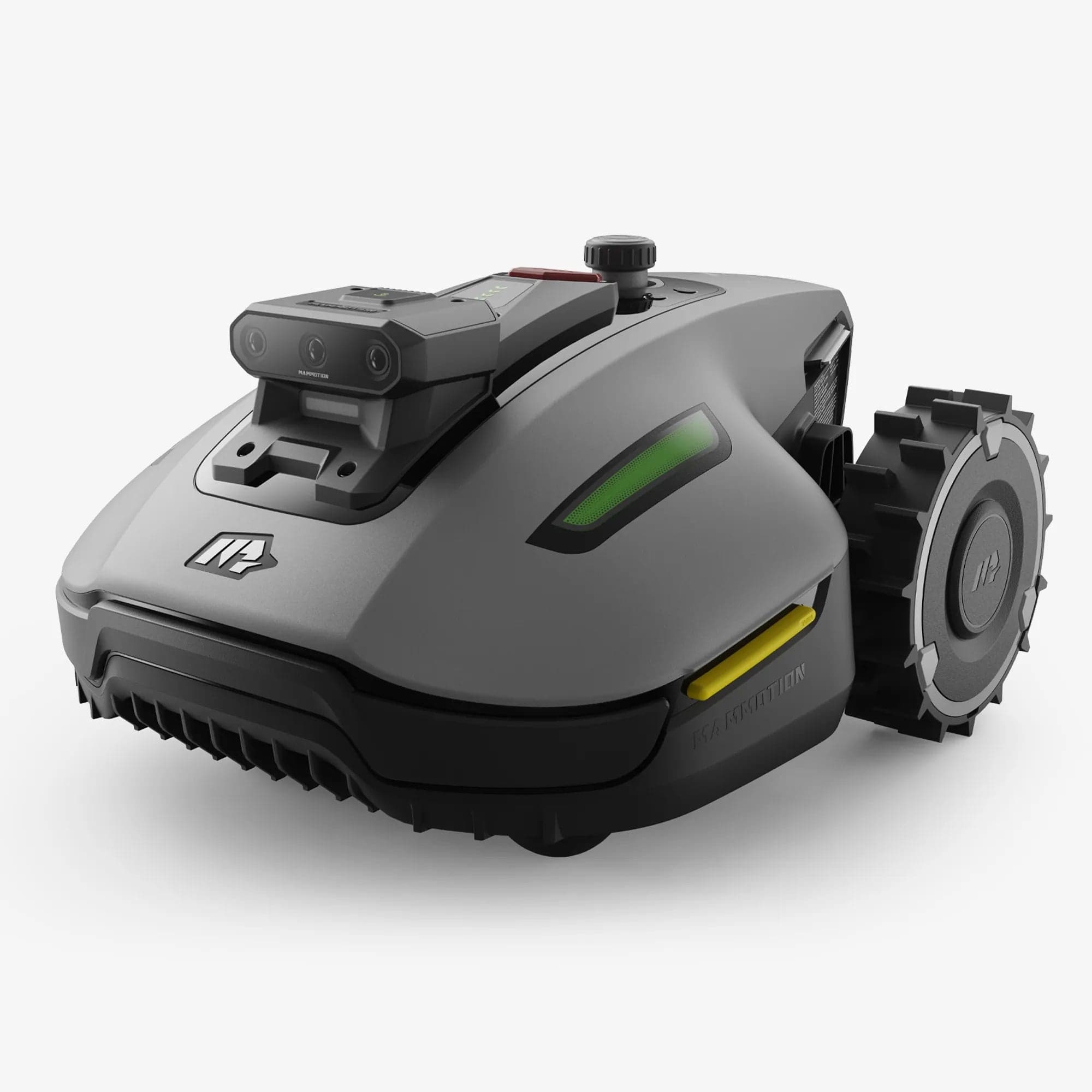
Mammotion YUKA mini 2 800Editor's choice 20268.4 / 10
Mammotion

YUKA mini 2 800

Best overall up to 1,500 m²

The combination of RTK and AI vision makes the difference on mixed gardens, where RTK alone loses track under trees. The cadence and border finish place it at the top of the panel.

We retain
  • Centimeter satellite precision
  • Pet-certified ground-level AI vision
  • Installation in less than 30 minutes
We nuance
  • Higher price than the segment average
  • Application still improvable
Surface
800 m²
Slope
45 %
Noise
60 dB
Warranty
2 years
See the detailed review
Best value for money
Segway

i206

Gardens up to 800 m² with relief

AWD under 900 € changes the game for Breton or coastal terrains. Mowing in straight lines, no wire to bury, correct border finish without being premium.

We retain
  • AWD at contained price
  • No perimeter wire
  • App-guided installation
We nuance
  • Borders improvable on curved walls
  • Noise under high load above 62 dB
See the detailed review
Perfect borders
Ecovacs

a1600 lidar pro

Landscaped garden 800 to 2,000 m²

LiDAR detects walls and obstacles at 360° without depending on satellites. The border finish approaches that of manual cutting and bed following allows no overflow.

We retain
  • Very clean borders
  • No satellite dependency
  • Superior obstacle detection
We nuance
  • Slope limited to 30 %
  • Not ideal for very large surfaces
See the detailed review
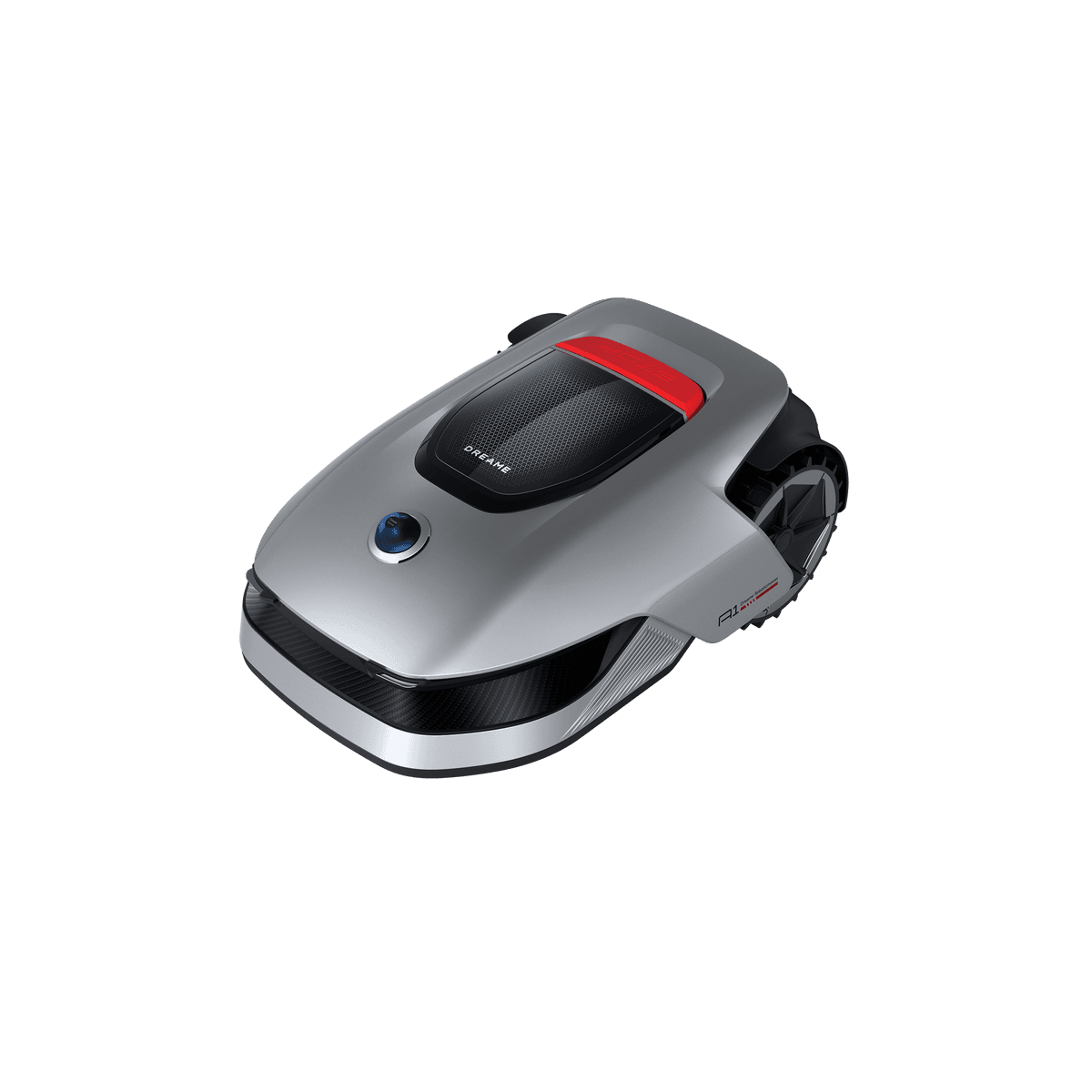
Dreame A1Fastest installation8.0 / 10
Dreame

A1

Garden 800 to 1,500 m² with little slope

Fifteen minutes of installation, clear application, first cycle right away. The onboard LiDAR and live mapping allow redefining zones without going back to an installer.

We retain
  • Ultra-fast setup
  • Fluid LiDAR mapping
  • Good autonomy
We nuance
  • European customer service still recent
  • Border mowing below average
Surface
1,000 m²
Slope
35 %
Noise
62 dB
Warranty
2 years
See the detailed review
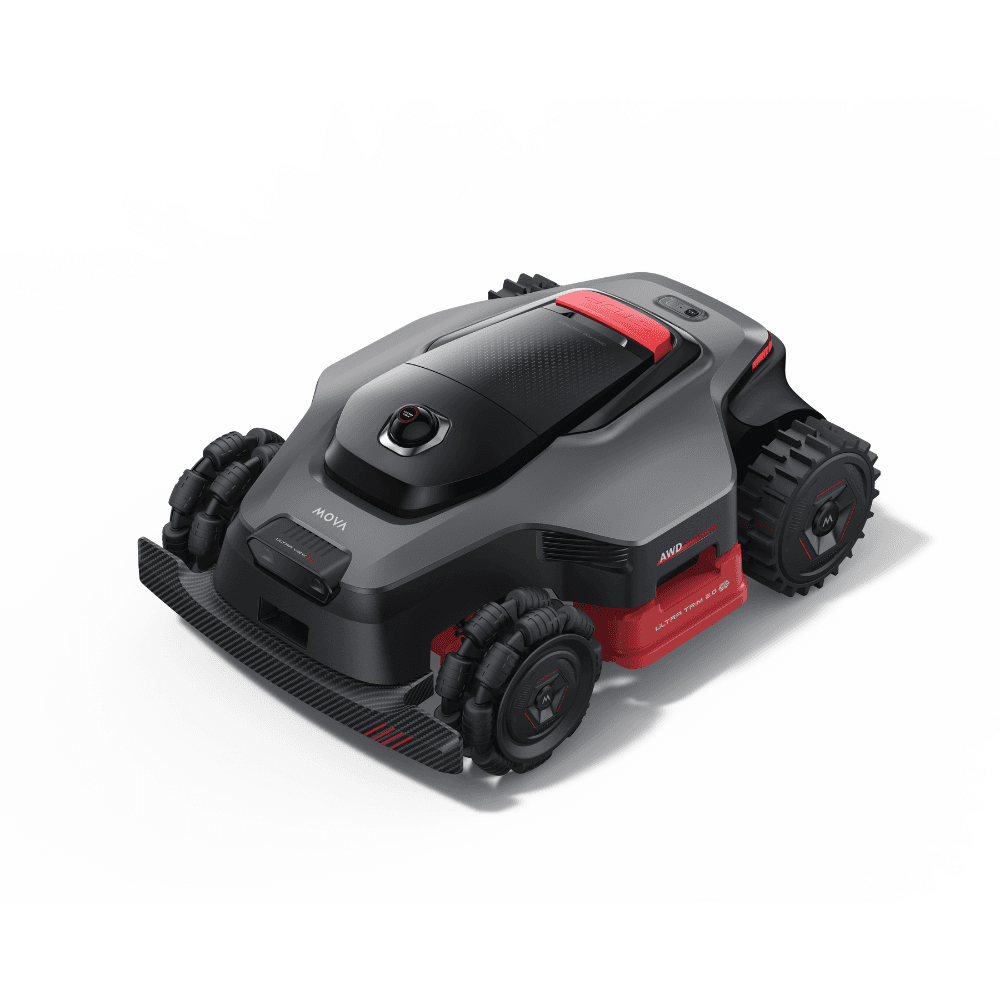
Mova MOVA LiDAX Ultra 1600Small budget8.5 / 10
Mova

MOVA LiDAX Ultra 1600

Urban garden under 300 m²

Under 600 €, the newsroom has found nothing better for a small flat garden. Navigation remains basic but consistent on open surfaces. Ideal for a first robotic mower.

We retain
  • Unbeatable price
  • Compact use
  • Contained noise
We nuance
  • No multi-zone
  • Slope limited to 25 %
Surface
1,600 m²
Slope
50 %
Noise
66 dB
Warranty
2 years
See the detailed review
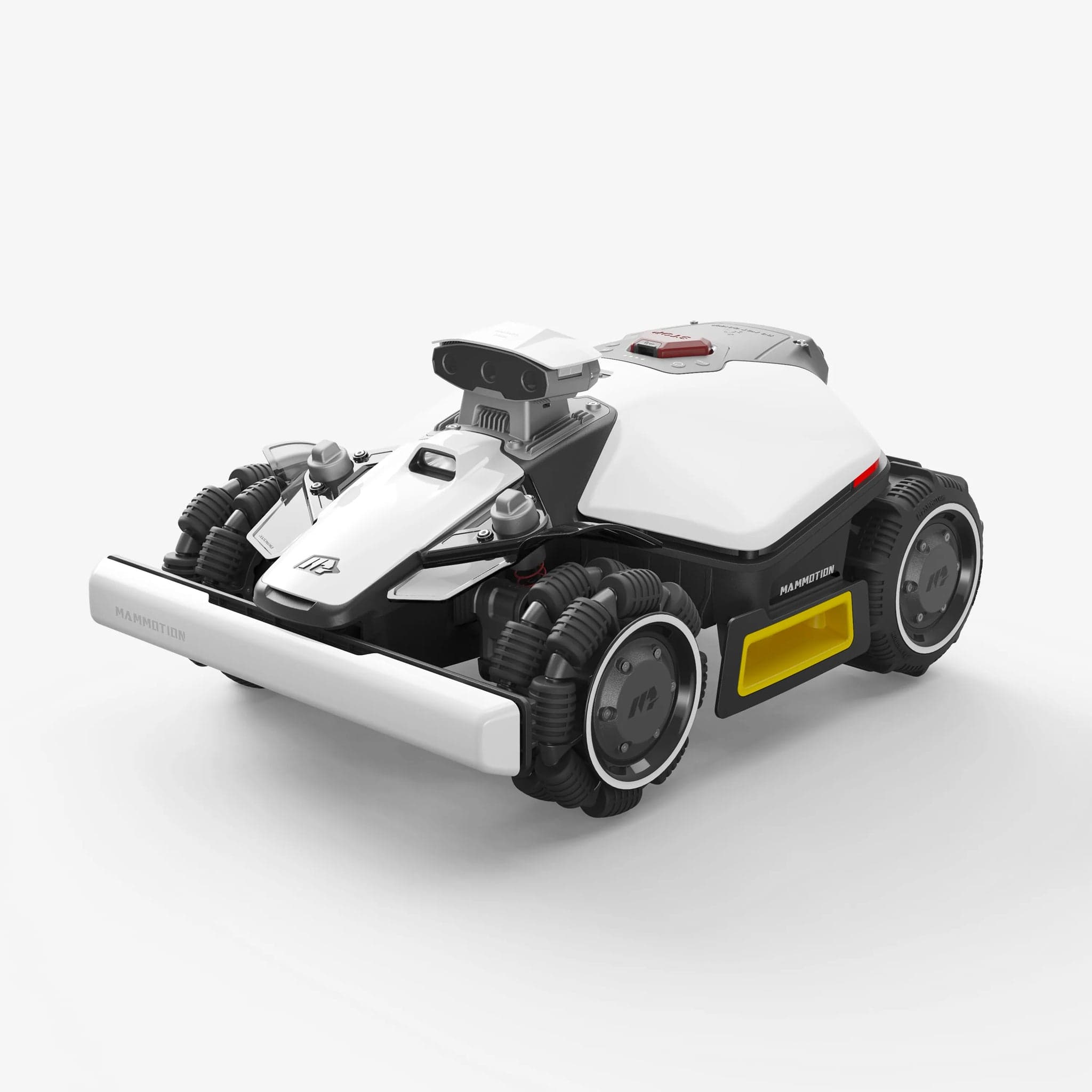
Mammotion LUBA mini 2 AWD 1000Extreme slopes8.8 / 10
Mammotion

LUBA mini 2 AWD 1000

Slopes 60 to 80 %, technical terrain

The most performant AWD in the panel, validated up to 80 % slope in real conditions. The only model that truly resolves alpine gardens or terraced vineyards.

We retain
  • 80 % certified AWD
  • Chassis robustness
  • Precise RTK
We nuance
  • Oversized for flat terrain
  • Greater bulk and weight
Surface
1,000 m²
Slope
45 %
Noise
58 dB
Warranty
2 years
See the detailed review
03 · Wire or wire-free

Perimeter wire or wire-free navigation: what to choose in 2026?

The market has shifted. Among new models sold in Europe in 2026, wire-free navigation now equips the overwhelming majority of consumer references. However, wired retains a precise territory, which must be recognized.

Let's cut to the chase: for a new garden in 2026, the Mowy Lab newsroom recommends wire-free navigation in the majority of cases. Laying a perimeter wire remains relevant in three precise configurations, listed below. Outside these cases, the added cost of an RTK or LiDAR is justified by quick installation, multi-zone flexibility and cartographic updates without external intervention.

CriterionPerimeter wireRTK satelliteLiDAR / AI vision
Installation4 to 6 h ground laying30 min antenna15 min mapping
Entry price≈ 700 €≈ 1,800 €≈ 1,200 €
Multi-zoneLimited, dedicated wireNative, unlimitedNative, unlimited
Precision± 15 cm± 1 cm± 5 cm
Under treesStableVariableStable
EvolutivityRewireApp onlyApp only
Theft riskLowMedium, onboard GPSMedium
To retain

Three cases where wired remains the right answer

Simple flat garden under 800 m² with constrained budget, terrain under very dense canopy where satellite coverage is unstable, rental or house intended for resale where wire laying remains the most discreet investment. In these three cases, the added cost of RTK or LiDAR is not justified, and the observed reliability of wired remains the highest in the panel after two seasons.

04 · The budget

How much does a robotic mower cost, and what do you get at each tier?

On the Mowy Lab 2026 panel, the entry ticket for a reliable robotic mower over eight years starts at 700 € wired and 1,800 € wire-free. Beyond that, price tiers correspond to clear technological leaps, never to simple refinement.

Price tierWhat you getFor which profile
400 to 700 €Entry-level wired, random navigation, no multi-zone, slope under 25 %.Small urban flat garden under 300 m², first robotic mower.
700 to 1,200 €Comfort wired or entry RTK, limited multi-zone, slope up to 35 %, lift sensors.Standard garden 300 to 1,000 m², the most represented tier in the 2026 panel.
1,200 to 2,000 €Comfort RTK or LiDAR, native multi-zone, entry-level AWD, pet AI vision.Family garden 800 to 2,000 m², first serious wire-free.
Beyond 2,000 €High-end RTK, tri-fusion navigation, 70 % and more certified AWD, extended warranty.Very large properties, technical terrains, intensive use.

Usage cost over eight years

Electricity remains marginal. The Mowy Lab newsroom observes on average 15 to 25 € per year for a robotic mower running three cycles per week over five months of season. The real recurring expenses focus on three parts.

  • Blades
    40 to 90 € · 3 to 4 times over 8 years

    Depending on use and lawn type, more often in humid climate.

  • Battery
    200 to 400 € · 1 time over 8 years

    Five years on average on lithium-ion, sometimes seven on the best models.

  • Shelter
    80 to 250 € · once

    Optional but doubles the longevity of hull and battery in humid climate.

05 · Installation

Installation and maintenance: what changes according to the technology

Installation of a 2026 robotic mower takes fifteen minutes in LiDAR, thirty minutes in RTK, four to six hours in self-installed wired. Maintenance focuses on three wear parts and an off-season that often decides the actual longevity of the model.

StepWiredRTKLiDAR / AI vision
Initial setup4 to 6 h, ground wire30 min, fixed antenna15 min, guided mapping
Zone updatePartial rewireApplicationApplication
WinteringStation disassemblyStation disassemblyStation disassembly
Blades1 to 3 months1 to 3 months1 to 3 months
Battery5 to 7 years5 to 7 years5 to 7 years
06 · The pitfalls

Five mistakes to avoid before purchase

Over two seasons of observation, the Mowy Lab newsroom sees five errors recur that turn a good purchase into lasting frustration. Avoiding them requires no technical skill, only taking the time to decide upstream.

  1. Mistake 01

    Underestimating the surface

    Buying a robotic mower announced for 1,000 m² when the garden measures 950 m² actual leads to premature wear. The minimum margin remains 20 %, and 30 % in humid climate.

  2. Mistake 02

    Ignoring the steepest slope

    An average of 18 % can hide a spot at 35 %. The robotic mower stops at this precise point, never at the average. Measure the most difficult slope, not the average.

  3. Mistake 03

    Neglecting the battery warranty

    The battery represents 30 to 40 % of the total cost over eight years. A two-year battery warranty often signals a generic supplier, to avoid on entry-level models.

  4. Mistake 04

    Forgetting the hidden subscription

    On some high-end RTK models, cloud functions (remote mapping, AI vision) shift behind a subscription after the first year. The newsroom systematically flags these fees.

  5. Mistake 05

    Choosing only by brand

    A historic brand on thermal mowers is not automatically the best on robotic mowers. New entrants have caught up part of the gap, sometimes surpassing established references on the price-to-reliability ratio.

07 · The FAQ

Your frequent questions about choosing a robotic mower

Eleven concise answers to the questions most often received by the newsroom. Each refers, when useful, to the detailed test or side-by-side comparison that pushes the analysis further.

Which robotic mower to choose for 500 m²?

On 500 m² flat to moderately rolling, two profiles stand out. A properly installed entry-level wired remains competitive around 700 to 900 €, with proven reliability. A compact RTK like the Segway Navimow i105E at about 649 € avoids wire laying and installs mapping in fifteen minutes. The choice depends on garden complexity.

Which robotic mower to choose for 1,000 m²?

At 1,000 m², the Mowy Lab newsroom recommends switching to wire-free as soon as there is more than one zone or a narrow passage. The Segway Navimow i206 AWD at 899 € covers most cases. The Husqvarna Automower 410VE NERA remains relevant wired for a simple garden on a contained budget.

Which robotic mower to choose for 2,000 m² or more?

Beyond 2,000 m², only high-end RTK and LiDAR hold the pace. The Mammotion Yuka Mini 2 and the Husqvarna Automower 450X NERA AWD dominate this segment. Count 2,500 to 4,500 € depending on slope and complexity, with autonomy greater than 180 minutes per cycle.

What maximum slope for a robotic mower in 2026?

Standard models cap at 35 % declared slope. All-wheel drive models, called AWD, climb to 60 or even 80 % on technical references. The newsroom advises subtracting ten points from the announced value to estimate the slope actually managed on wet grass or loose soil.

Is a perimeter wire still needed in 2026?

On simple flat garden under 1,000 m², wired remains the most stable and cheapest solution over eight years. Beyond, or as soon as there are multiple zones, RTK or LiDAR regain the advantage in quick installation and multi-zone management. Wired does not disappear, it focuses on precise cases.

Does a robotic mower work in the rain?

All models tested by Mowy Lab are rated IPX4 minimum, which covers moderate rain. The majority has a rain sensor that returns the robotic mower to its base beyond a certain intensity. In very humid climate, IPX5 and an optional shelter limit corrosion over time.

Robotic mower or classic mower: what to choose?

The robotic mower replaces the classic mower on regularly maintained lawns. It practices mulching, fertilizes naturally and saves an average of 80 hours per year to the owner. The classic mower remains relevant for very large surfaces where the cost of a suited robotic mower exceeds that of a ride-on, or for lawns left high for several weeks.

Which robotic mower brand to choose?

No brand universally dominates the 2026 market. Husqvarna and Stiga retain the best observed SAV reliabilities over two seasons. Mammotion, Segway Navimow and Ecovacs have caught up part of the gap in innovation, sometimes surpassing established references on the price-to-reliability ratio. The choice is by profile, never by brand reputation alone.

How long does a quality robotic mower last?

On established industrial brands, a useful lifespan of eight to twelve years is observed, provided battery and blades are replaced at announced deadlines. On entry-level brands, the average drops to four to six years. Part availability beyond five years remains the most reliable indicator.

Is a subscription needed for 2026 models?

On high-end RTK models, some cloud functions (remote mapping, AI detection) are sometimes conditioned to a subscription after the first year. The Mowy Lab newsroom systematically flags these recurring fees. Several European brands remain entirely subscription-free.

Is a robotic mower dangerous for animals and hedgehogs?

Models equipped with lift sensors and AI vision detect a ground-level obstacle and stop the blades in less than a second. On the panel, Mammotion, Husqvarna NERA and Stiga A integrate this protection as standard. The newsroom still recommends programming daytime mowing, never at dawn or dusk, periods of maximum hedgehog activity.

Go further

The method is set. The complete panel awaits.

The 2026 editorial top 10 extends this guide with one robotic mower per profile and the three eliminated models explained. The side-by-side comparator allows putting two to five models side by side on 22 measured criteria.

See the Mowy Lab top 10Open the comparator