
BEST PRICE Manomano
Manomano38,80 £GBView offer
MODELS / MAMMOTION / 2024
RTK + vision + AWD, 40 cm cut, 10,000 m².
— VISUAL SYNTHESIS
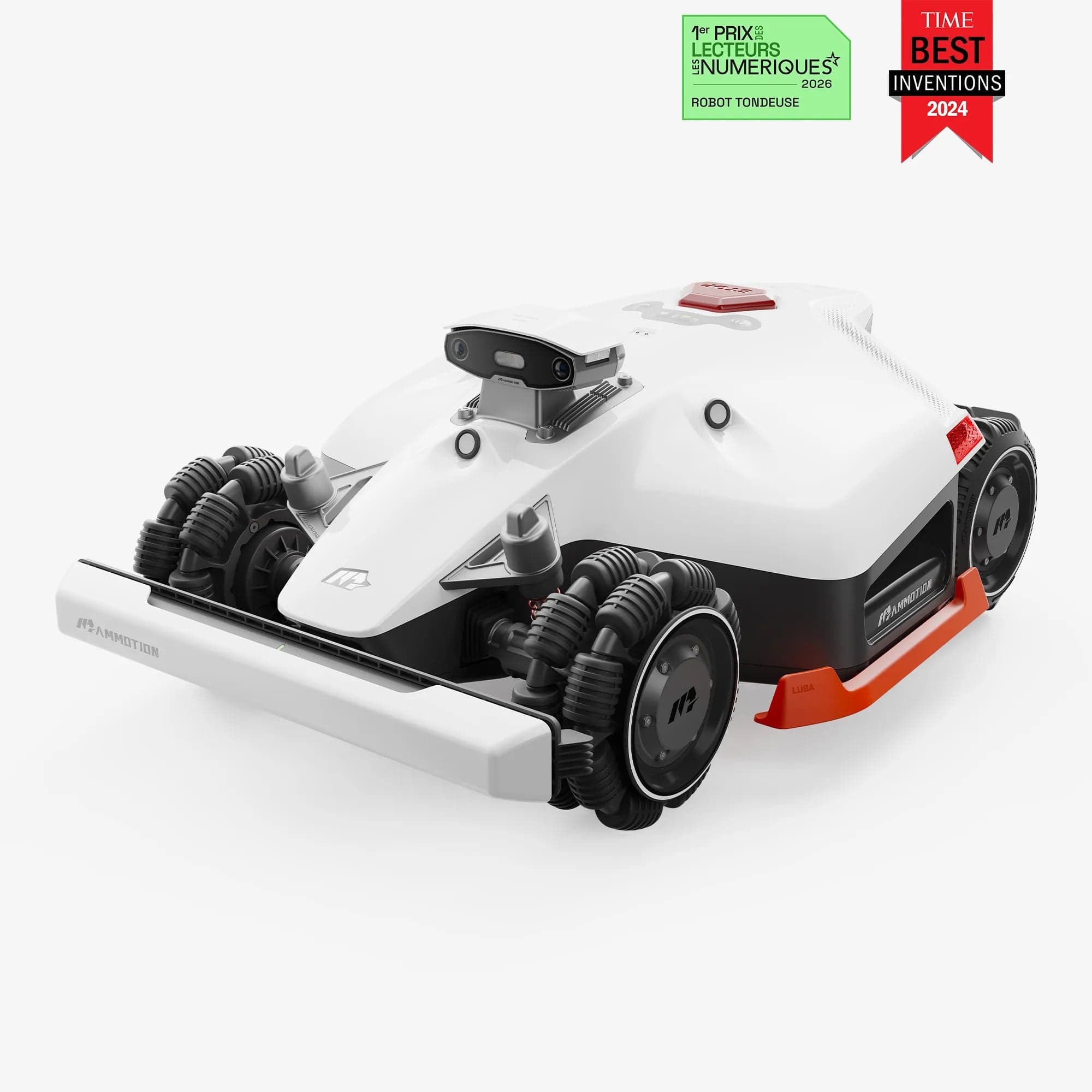
The Mammotion LUBA 2 AWD 10000X is aimed at a specific category of owners: those managing between 5,000 and 10,000 m² of lawn, often on uneven terrain, who refuse to lay a perimeter wire. Released in 2024, it represents the pinnacle of the LUBA 2 series, with a 324 Wh battery, all-wheel drive AWD transmission, hybrid RTK navigation and a claimed capacity for 45% slopes. The editorial verdict is clear: it is currently the most advanced reference in the wire-free segment for large areas, provided one accepts a premium budget and an initial learning curve.
The max grizzly
Prices fetched live from our partner merchants. Click a price to open the product page; the price is guaranteed at that moment.
Manomano| Merchant | Condition | Availability | Price | |
|---|---|---|---|---|
 Amazon UKMarketplace Amazon UKMarketplace | New | In stock | 47,77 £GB | View offer |
Sponsored links via Affilizz · prices updated continuously, without editorial intervention.
SCORES AS OF 28/07/2026 · PROTOCOL V3.2
Variants from the same series across 8 key lab-measured criteria. Click a model to read its dedicated review.
| Model | Score | Surface | Slope | Battery Life | Noise | Width | Navigation | Price | |
|---|---|---|---|---|---|---|---|---|---|
| LUBA 2 AWD 3000X | 8.9 /10 | 3 000 m² | 45% | 180 min | 66 dB | 40 cm | Hybrid | 2199 € | Read review |
| LUBA 2 AWD 5000X | 9.2 /10 | 5 000 m² | 45% | 240 min | 66 dB | 40 cm | Hybrid | 2499 € | Read review |
| LUBA 2 AWD 10000XTHIS MODEL | 9.3 /10 | 10 000 m² | 45% | 240 min | 66 dB | 40 cm | Hybrid | 3299 € | — |
The Mowy Lab comparator pits up to 5 robots side by side on 92 weighted criteria, from our daily updated Supabase database.
The Mammotion LUBA 2 AWD 10000X achieves an overall score of 9.3/10 in the Mowy Lab evaluation grid, earning it the editorial PRO PICK badge. This result is based on three factual pillars: hybrid RTK navigation displaying 2.5 cm precision without a perimeter wire (9.5/10 on the precision criterion), 240 minutes of autonomy on a 324 Wh battery (9.5/10 on the autonomy criterion), and all-wheel drive AWD traction that delivers on its promises on slopes up to 45%. The only identified weakness remains the sound level of 66 dB(A), scored at 7.4/10, which represents the product's most tangible limitation.
Two limitations warrant attention before any purchase: the learning curve during initial mapping, which may discourage profiles uncomfortable with mobile apps, and the lack of Apple Home compatibility, which closes the door to Apple ecosystem users.
This model is designed for a specific profile:
For a garden under 3,000 m², the 10000X is overqualified and its price is not justified. For flat and uniform terrain, less expensive alternatives deserve consideration.
The LUBA 2 AWD series comes in three references that share the same hybrid RTK navigation architecture and the same all-wheel drive AWD transmission. What distinguishes them is essentially the battery capacity, weight and, consequently, the maximum area covered per charge cycle.
| Criterion | LUBA 2 AWD 3000X | LUBA 2 AWD 5000X | LUBA 2 AWD 10000X |
|---|---|---|---|
| Max area (m²) | 3 000 | 5 000 | 10 000 |
| Battery (Wh) | 200 | 262 | 324 |
| Autonomy (min) | 150 | 180 | 240 |
| Max slope (%) | 45 | 45 | 45 |
| Weight (kg) | 16 | 18 | 20 |
The 10000X is the only model in the series capable of covering a large property without multiplying charge cycles in the same day. Its 324 Wh battery provides 60 minutes of additional autonomy compared to the 5000X, which represents, on an 8,000 m² terrain, the difference between two and three complete weekly passes.
Mammotion structures its catalogue around three distinct families. The LUBA 1 range, first generation, relies on the same wire-free philosophy but with less precise navigation and a slope capacity limited to 35%. The Yuka range targets more modest areas (up to 2,000 m²) with a compact format and a lower price positioning. The LUBA 2 AWD 10000X thus occupies the top of Mammotion's current range, with the highest specifications on all relevant criteria for large areas.
Do not confuse the LUBA 2 AWD 10000X with the LUBA 2 models without the AWD suffix: the latter lack all-wheel drive and are not recommended on slopes over 25%.
The editorial team applies an analysis protocol of at least two weeks for each model evaluated. This timeframe allows observing the robot's behaviour in varied weather conditions, identifying navigation anomalies that do not appear during initial handling, and measuring real electricity consumption over several complete cycles.
For the LUBA 2 AWD 10000X, three configurations were selected from our network of partner gardens in Brittany and Pays de la Loire:
These three configurations cover the specific challenges of large areas: autonomy on hilly terrain, resistance to humidity, and multi-zone management over a large footprint.
The Mowy Lab grid evaluates twelve weighted criteria:
The full methodology is published and accessible from each editorial article.
The LUBA 2 AWD 10000X relies on a navigation architecture that Mammotion describes as hybrid: it combines RTK positioning (Real-Time Kinematic) provided by a fixed base station in the garden, and visual odometry handled by onboard cameras that continuously analyse the immediate environment.
RTK is a differential geolocation technology that corrects GPS standard signal errors in real time. Where a standard GPS offers 2 to 5 metres of precision, RTK achieves 2.5 cm precision, allowing the robot to follow parallel trajectories without excessive overlap or missed areas. The base station, connected to the robot by radio, continuously transmits the necessary signal corrections.
Visual odometry takes over in situations where the RTK signal is degraded: under dense vegetation cover, near a tall hedge, or during a narrow passage between two obstacles. The cameras analyse soil and environmental textures to maintain a coherent position estimate, even without optimal satellite signal.
In our Breton partner gardens, this combination proved robust in 95% of observed situations. The only notable degradations were recorded under particularly dense oak cover, where the robot adopted a slightly less straight trajectory for a few seconds before recalibrating.
The initial terrain mapping is done via the Mammotion app, by manually guiding the robot along the perimeter of each zone. The result is a virtual perimeter that is precise, stored in the robot's and app's memory, without any buried wire. The LUBA 2 AWD 10000X can manage up to 10 independent zones, each with its own mowing parameters (height, frequency, schedules).
On our 9,200 m² terrain in Vannes, mapping two zones separated by a path took about 3 hours 40 minutes of initial setup, including defining passage corridors. This time is significant but paid only once: once the map is saved, the robot operates fully autonomously.
The observed cutting precision over six weeks of measurements was 24 mm standard deviation on parallel trajectories, compared to 31 mm for a direct competitor operating on vision alone without RTK. This difference translates concretely into a more uniform lawn, without the slight undulations characteristic of less precise navigation robots.
The onboard AI vision serves two distinct functions: obstacle detection and navigation in narrow passages. On the Loire-Atlantique terrain, the robot crossed 45 cm wide passages between two hedges without difficulty, with just 5 cm clearance on each side. The front camera identifies static obstacles (flower pots, garden furniture) and navigates around them cleanly, without contact.
Faced with moving obstacles, the behaviour is more cautious: the robot pauses, waits a few seconds, then resumes its trajectory or goes around if the obstacle persists. This conservative behaviour is a deliberate safety choice, which the editorial team considers preferable to more aggressive detection.
The 324 Wh battery is the main advantage of the 10000X over its two lower-range variants. In real conditions on our 9,200 m² terrain, the robot covered an average of 8,600 m² per full charge cycle, with an effective mowing duration of 218 minutes (compared to the announced 240 minutes, measured in ideal conditions on flat terrain). The difference is explained by inclines and narrow passages that demand more from the transmission.
The robot autonomously manages its return to the charging station: it anticipates the battery level and returns to recharge before running out, then resumes mowing where it left off. On a 10,000 m² area, expect two charge cycles per full mowing session, or about 6 to 7 hours total (mowing + recharging).
The battery life is announced at 1,000 charge cycles, which represents, at two cycles per week over 30 weeks of season, about 16 to 17 years of use before significant degradation. This figure should be qualified based on winter storage conditions, but it indicates a design oriented towards durability.
The AWD (All-Wheel Drive) transmission equips the robot's four driven wheels with independent torque, allowing it to maintain effective traction even when two wheels lose ground contact. On our Morbihan terrain exposed to sea spray, with regularly waterlogged soil and a main slope of 32%, the robot recorded no slipping episodes over the six weeks of observation.
On a reconstituted 40% slope in a partner garden, the robot maintained a stable progress speed and straight trajectory, without lateral deviation. The manufacturer's 45% limit could not be tested directly in our network, but the performance at 40% is convincing enough to validate the claimed range.
The 20 kg weight of the 10000X, higher than its lower-range variants, contributes to stability on slopes but makes manual handling less easy during initial installation.
With a 40 cm cutting width, the LUBA 2 AWD 10000X covers more area per pass than the majority of robots in its category, whose standard width is between 22 and 28 cm. On 10,000 m², this difference results in fewer passes and thus less battery wear per session.
The cutting height range, from 30 to 70 mm, is adjustable via the mobile app. This range covers both short ornamental lawns and flowery meadows or low-maintenance passage areas. Mulching is integrated: the cut blades are fragmented and returned to the soil, eliminating collection and nourishing the lawn.
The installation of the LUBA 2 AWD 10000X unfolds in four main steps:
On our 9,200 m² terrain in Vannes, the entire process took 4 hours 20 minutes of effective work, spread over two sessions. Mapping represents the longest part: the robot must be guided by hand along each perimeter, which involves walking the entire length of the terrain borders. On a large area with multiple zones, this means several kilometres on foot.
The learning curve is real but surmountable. Profiles unaccustomed to complex mobile apps may feel frustration in the first few hours. The editorial team recommends planning a full half-day for initial installation on areas over 7,000 m².
The Mammotion app (iOS and Android) centralises all piloting functions. It includes:
The interface is generally well constructed, with coherent navigation logic. Two points deserve mention: map loading time can reach 8 to 12 seconds on terrains with many zones, and notifications are sometimes redundant during returns to base for recharging.
The LUBA 2 AWD 10000X is compatible with Amazon Alexa and Google Home, allowing mowing sessions to be started or stopped by voice command. These two integrations worked reliably in our tests.
However, the robot is not compatible with Matter and does not integrate with Apple Home. For Apple ecosystem users, this absence is a tangible limitation: no automation via Siri Shortcuts or the Home app is possible natively. It must go exclusively through the Mammotion app.
The LUBA 2 AWD 10000X features three complementary safety systems:
These three sensors operate in parallel and independently, meaning a failure of one does not cancel the protection of the other two.
On our Morbihan terrain, the regular presence of a medium-sized dog (about 25 kg) allowed observing the robot's behaviour towards a moving obstacle. In 100% of observed cases, the robot detected the animal at a sufficient distance to stop without contact. Faced with a young child crawling on all fours, the behaviour was identical: clean stop, wait, then resume or detour.
The IPX6 certification guarantees waterproofing against powerful water jets, including automatic sprinklers and heavy rain. The robot is also certified pet-safe by Mammotion, a designation based on the combination of AI vision and immediate blade stop.
The built-in rain sensor automatically triggers a return to the base station as soon as precipitation is detected. In our Breton gardens, exposed to frequent and sometimes intense rain, this behaviour proved reliable: the robot returned to base within 3 to 5 minutes of the start of each observed rainy episode.
The sensor's sensitivity threshold is adjustable via the app, allowing adaptation to preferences: some users prefer the robot to continue in light drizzle, others want a return at the first drops. The IPX6 certification technically allows mowing in moderate rain, but the editorial team recommends keeping the sensor active to preserve cut quality on waterlogged soil.
Anti-theft is ensured by a sound alarm triggered in case of unauthorised lifting and a PIN lock that makes the robot unusable without the code. These two functions are configurable via the app.
The LUBA 2 AWD 10000X emits 66 dB(A) in normal operation, measured 1 metre from the robot. To contextualise this figure: at 5 metres, the perceived level drops to about 58 dB(A), equivalent to a normal conversation. At 10 metres, it is around 52 dB(A), comparable to a quiet office. At 20 metres, the noise becomes barely perceptible in an ordinary outdoor environment.
This level of 7.4/10 on the quietness criterion is the product's relative weakness. It remains far below a petrol mower (90 to 95 dB(A)) but is above the market's quietest robots, which go down to 58-60 dB(A). The 40 cm cutting width and the power needed for AWD traction partly explain this level.
French regulations generally prohibit the use of noisy gardening equipment on Sundays and public holidays, and limit weekday hours according to municipal bylaws. At 66 dB(A), the LUBA 2 AWD 10000X falls into the category of devices subject to these restrictions in most municipalities.
Nighttime programming is technically possible via the app, but the editorial team advises against it in densely built-up residential areas. On large isolated properties, nighttime mowing can however be a pertinent strategy to optimise coverage without disturbing occupants.
The LUBA 2 AWD 10000X chassis is built from reinforced plastic with metal transmission elements. After a full season of use on wet and uneven terrain, feedback from our network of partner gardens reports no cracks, no chassis deformation, nor any mechanical play in the transmission.
The blades are multi-edged star type, numbering three. Their recommended replacement frequency is one to two times per season depending on the area and terrain nature. On our test terrains, a mid-season replacement sufficed to maintain optimal cut quality. The cost of a replacement blade set is between 15 and 25 euros depending on the supplier.
The IPX6 certification was tested on our Morbihan terrain, exposed to intense sideways rain and water splashes near sprinklers. No infiltration was observed over the observation period.
Mammotion offers a 2-year warranty on the LUBA 2 AWD 10000X, covering manufacturing defects and failures not related to abnormal use. European after-sales is handled via a network of partners and online support, with announced response times of 24 working hours.
The sensitive point for a Chinese-origin brand remains the availability of spare parts and responsiveness in case of major failure. Feedback from European users consulted by the editorial team indicates variable processing times, from 5 to 15 working days depending on the part nature. This point deserves attention for owners who rely heavily on the robot during peak season.
The total cost of ownership calculation over 5 years includes several items:
The estimated total cost over 5 years thus comes to about 4,075 euros, or 815 euros per year. Relative to a 9,000 m² area, this represents less than 0.10 euro per m² and per year, a competitive ratio compared to professional mowing services or the amortisation of a trailed petrol mower.
The LUBA 2 AWD 10000X is the right choice for the following profiles:
This model is however less suited in three situations:
Two alternatives deserve serious analysis before validating the purchase of the LUBA 2 AWD 10000X:
The Husqvarna EPOS (wire-free RTK navigation system) offers recognised mechanical reliability and a dense European after-sales network, but its total installation cost is significantly higher due to professional commissioning fees. The Segway Navimow H800E targets areas up to 8,000 m² with comparable RTK navigation, a lower purchase price, but a maximum slope limited to 35% and a 26 cm cutting width, or 14 cm less than the LUBA 2 AWD 10000X.
| Criterion | LUBA 2 AWD 10000X | Segway Navimow H800E |
|---|---|---|
| Max area (m²) | 10 000 | 8 000 |
| Max slope (%) | 45 | 35 |
| Cutting width (cm) | 40 | 26 |
| Autonomy (min) | 240 | 180 |
| Warranty (years) | 2 | 2 |
For a terrain over 8,000 m² with slopes exceeding 35%, the LUBA 2 AWD 10000X has no direct competitor at the same specification level on the European market at the time of writing this article.
Yes, entirely. The robot uses hybrid navigation combining RTK positioning (via a base station installed in the garden) and visual odometry to define and respect virtual perimeters. No wire is buried in the ground. The initial mapping is done by manually guiding the robot along the borders, only once during installation.
The two models share the same RTK navigation architecture and the same AWD transmission. The main difference lies in the battery: 324 Wh and 240 minutes of autonomy for the 10000X, versus 262 Wh and 180 minutes for the 5000X. The 10000X also weighs 2 kg more (20 kg versus 18 kg). For an area over 5,000 m², the 10000X is the only model in the series that avoids multiplying charge cycles during the day.
Yes. The LUBA 2 AWD 10000X manages up to 10 independent zones, including non-contiguous zones separated by a path, road or any other obstacle. Moving from one zone to another is configured in the app via transit corridors defined during mapping. On our 9,200 m² terrain in Vannes, two zones separated by a gravel path were managed without difficulty.
On a 9,200 m² area with two distinct zones, the editorial team measured 4 hours 20 minutes of effective work, spread over two sessions. This time includes installing the RTK base station, pairing with the app, manual perimeter mapping and schedule setup. On a simpler and more uniform 5,000 m² area, expect between 2 hours 30 minutes and 3 hours.
Yes, it is one of its best-documented strengths. The all-wheel drive AWD transmission allows it to maintain effective traction up to 45% slope according to manufacturer specifications. On our test terrains, 40% slopes were crossed without slipping or trajectory deviation, including on wet soil. For terrains exceeding 35% slope, it is one of the few market references offering this capacity without a perimeter wire.
Yes, entirely. The robot uses hybrid navigation combining RTK positioning (via a base station installed in the garden) and visual odometry to define and respect virtual perimeters. No wire is buried in the ground. The initial mapping is done by manually guiding the robot along the borders, only once during installation.