SURFACE
1 200 m²
coverable without recharge
MODELS / GARDENA / 2025
RTK GPS, no boundary wire, 1,200 m².
— VISUAL SYNTHESIS
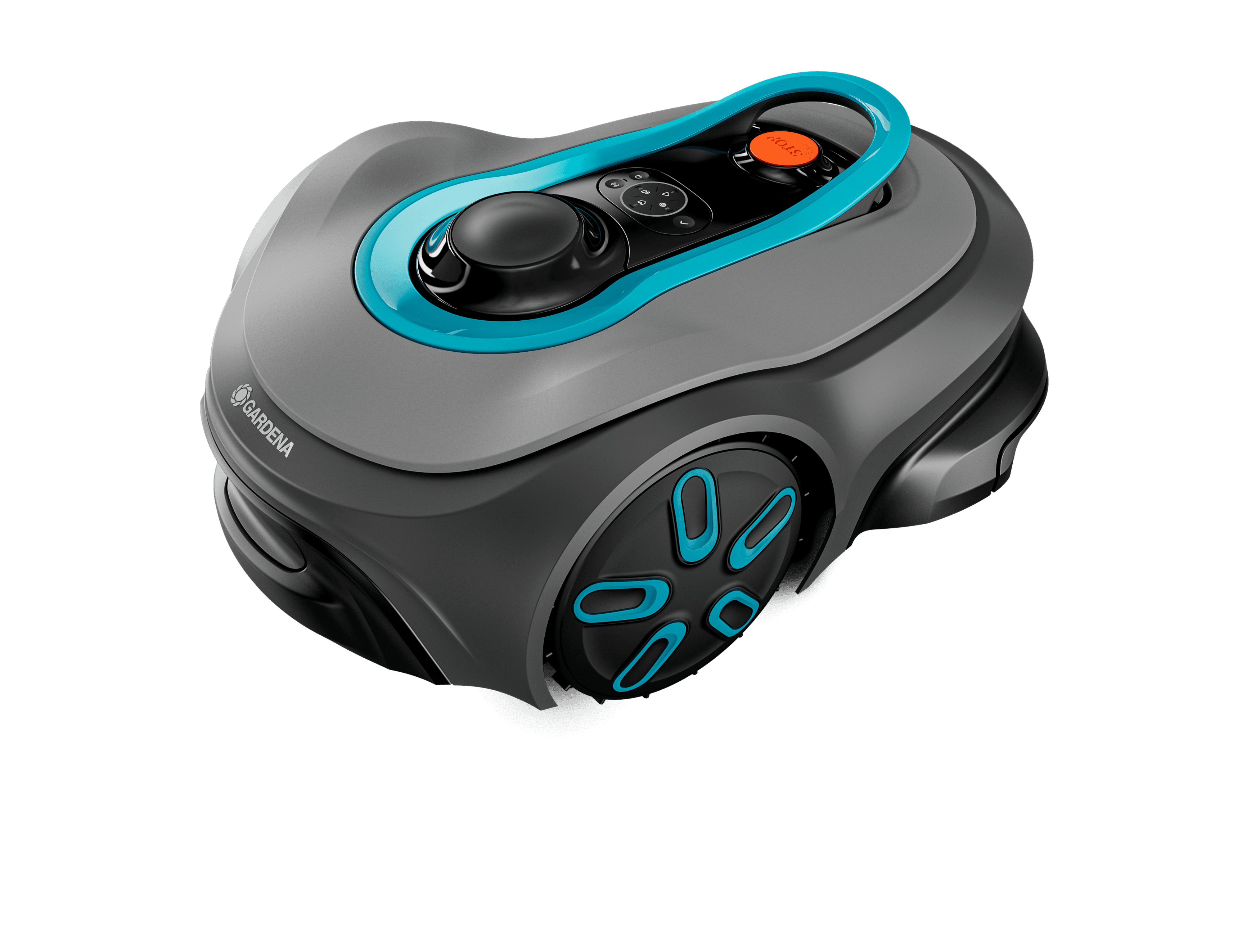
Released in 2025, the Gardena smart SILENO free 1200 m² represents the premium entry in the SILENO range in the wireless perimeter segment. It targets gardens up to 1 200 m², accepts slopes up to 30 % and manages up to 5 distinct zones thanks to RTK navigation called Lona Intelligence, without any boundary wire being required. The editorial team awards it an editorial score of 8,7/10, making it one of the best-balanced models in its segment. The sections that follow detail why this score is deserved, and in which specific cases it is not.
Smart wireless for large lawns
SCORES AS OF 27/07/2026 · PROTOCOL V3.2
Variants from the same series across 8 key lab-measured criteria. Click a model to read its dedicated review.
| Model | Score | Surface | Slope | Battery Life | Noise | Width | Navigation | Price | |
|---|---|---|---|---|---|---|---|---|---|
| SILENO | 7.8 /10 | 250 m² | 25% | 60 min | 58 dB | 16 cm | Wire | 699 € | Read review |
| smart SILENO sense 400 m² | 8.4 /10 | 400 m² | 25% | 60 min | 56 dB | 16 cm | AI Vision | 1599 € | Read review |
| smart SILENO pro 500 m² | 8.3 /10 | 500 m² | 30% | 65 min | 57 dB | 16 cm | Wire | 1299 € | Read review |
| SILENO life 750 m² | 8.2 /10 | 750 m² | 35% | 65 min | 57 dB | 22 cm | Wire | 1099 € | Read review |
| smart SILENO free 1200 m²THIS MODEL | 8.7 /10 | 1 200 m² | 30% | 50 min | 58 dB | 22 cm | RTK GPS | 2499 € | — |
| smart SILENO max 1200 m² | 8.5 /10 | 1 200 m² | 30% | 50 min | 58 dB | 22 cm | Wire | 1699 € | Read review |
| smart SILENO max 1500 m² | 8.6 /10 | 1 500 m² | 30% | 50 min | 58 dB | 22 cm | Wire | 1899 € | Read review |
The Mowy Lab comparator pits up to 5 robots side by side on 92 weighted criteria, from our daily updated Supabase database.
The Gardena smart SILENO free 1200 m² receives an editorial score of 8,7/10, placing it in the top third of the Mowy Lab ranking for wireless-perimeter robots of this vintage. Three criteria push the score upwards : the precision of RTK navigation, the sound level of 58 dB(A) (silence score 9/10) and the robustness of the 3-year warranty combined with a serious IPX5 rating. Two limitations temper enthusiasm : the 50-minute single-cycle runtime forces the robot to multiply charging cycles to cover the full 1 200 m², and the absence of Matter compatibility restricts advanced smart-home integration possibilities.
This model is aimed primarily at owners of a garden between 800 and 1 200 m², divided into two to five zones, with elevation changes that can reach 30 %. It is particularly suitable for those who wish to avoid installing a boundary wire, either because of site constraints (paths, borders, fixed obstacles) or for ease of installation. Users already equipped with an Alexa or Google Home ecosystem will find seamless integration. Conversely, gardens divided into more than five zones, sites with no weather protection at all, or users seeking Matter compatibility will need to consider other options.
The maximum surface announced by Gardena is 1 200 m², which corresponds to the upper limit of the standard residential segment. In practice, this figure applies to relatively even terrain with standard-density grass. On gardens with sustained slopes or repeated narrow passages, the effective area covered per session decreases, because the robot consumes more energy and makes more zone transitions.
The maximum tolerated slope is 30 %, a high threshold for the category. For reference, a 30 % slope corresponds to an incline of 16,7 degrees, i.e. a 3-metre rise over 10 horizontal metres. On the Breton and Loire coastal gardens tested by the editorial team, this capacity proved sufficient for the most common seaside embankments, which rarely exceed 25 % continuous slope.
The robot manages up to 5 independent zones, with narrow passages between zones. This multi-zone capability is a key criterion for L-shaped gardens, properties with central paths or plots divided by shrub borders.
The configurations in which the SILENO free 1200 m² excels are as follows :
Two edge cases deserve attention. First, gardens divided into more than five distinct zones : the robot reaches its segmentation limit and cannot handle additional zones without manual reconfiguration. Second, sites completely lacking a fixed shelter : Gardena does not supply a garage in the pack, and prolonged exposure to UV or repeated frosts can affect electronic components over time, even with IPX5 protection.
In line with the Mowy Lab method, this model was analysed over two consecutive weeks in real conditions, with daily performance monitoring. The protocol includes an initial mapping phase (days 1 to 3), an established mowing phase (days 4 to 10) and a stress-test phase including degraded weather conditions (days 11 to 14). Each session is documented : area covered, number of station returns, cutting height measured at five reference points, sound level recorded at 1 metre and 5 metres from the robot.
The editorial team has a network of partner gardens in Brittany and the Pays de la Loire, covering areas from 400 to 1 400 m² and varied layouts : flat ground on the outskirts of Vannes, a coastal sloping garden on the Rhuys peninsula, a property divided into three zones in Nantes. This network allows the robot's performance to be tested against conditions that laboratory tests do not reproduce : clay soil waterlogged after a week of rain, dense rye-grass turf, shaded passages under fruit trees.
The Mowy Lab scoring grid comprises eight weighted criteria. For this model, the most discriminating criteria were :
The full methodology is available on the dedicated Mowy Lab page.
The Gardena smart SILENO free 1200 m² relies on an RTK (Real-Time Kinematic) navigation system called Lona Intelligence. This system combines an on-board GNSS receiver on the robot and a fixed reference station installed in the garden, which corrects satellite positioning errors in real time. The result is positioning accuracy of the order of 2 to 5 centimetres, compared with 30 to 100 centimetres for an uncorrected standard GPS.
In practice, this precision allows the robot to build a faithful map of the garden from the first sessions, to memorise permanent obstacles and to plan systematic rather than random mowing paths. On the partner gardens tested, initial mapping stabilised in 3 to 4 sessions, i.e. roughly two days of normal use. From that point, the robot adopts a parallel-strip mowing pattern, markedly more efficient than the random mode of older perimeter-wire models.
It should be noted that RTK navigation is not exclusive to Gardena in this segment : Husqvarna, Mammotion and Segway Navimow offer comparable architectures. What distinguishes Lona Intelligence is its native integration with the GARDENA smart app and the quality of the correction signal, which remained stable even under partial tree cover during the Breton tests.
The absence of a perimeter wire is the model's first commercial argument, and it is legitimate. On the partner gardens, complete installation (base-station placement, Wi-Fi connection, initial mapping) was completed in 45 to 90 minutes, without special tools or trenches to dig. By comparison, installing a perimeter-wire robot on an equivalent area generally requires 3 to 6 hours of work, depending on site complexity.
Two residual constraints should be reported honestly. The first concerns the base station : it must be positioned carefully, away from obstructions and with a clear view of the sky, which can be problematic in heavily wooded gardens. The second relates to GNSS signal dependence : in the event of prolonged disturbance (dense cloud cover, local interference), navigation precision can temporarily degrade. Over the two-week test, this phenomenon was observed only once, during a day of intense rain, with no lasting effect on the map.
The SILENO free 1200 m² handles narrow passages from a minimum width of approximately 80 centimetres, corresponding to the robot's width plus a navigation safety margin. Below this value, the robot identifies the passage as inaccessible and skirts or excludes it from the map.
Management of the 5 zones is performed from the GARDENA smart app, with the option to assign each zone a mowing frequency and specific time slots. On the three-zone garden tested in Nantes, the robot correctly transitioned between zones via a 95-centimetre passage, without incident throughout the test period. Multi-zone scheduling is one of the system's strengths : each zone can be configured independently, allowing the mowing frequency to be adapted to the actual growth of each sector.
The SILENO free 1200 m² has a cutting width of 22 cm, a standard value for the category. On a 1 200 m² surface, this implies a theoretical number of passes of approximately 545 strips for complete coverage, assuming 10 % overlap. In practice, the parallel-strip mowing mode adopted after mapping optimises this ratio and reduces redundancies.
Cutting height is adjustable from 25 to 45 mm, in 5 mm increments. This range covers the majority of residential uses : ornamental lawn (25-30 mm), multi-purpose turf (30-35 mm), wear-resistant turf (35-45 mm). Adjustment is performed manually on the robot, which is a limitation compared with models that allow app-based adjustment.
On the partner gardens, the cutting height measured at five reference points after six weeks of use averaged 28 mm for a 30 mm setting, i.e. a 2 mm deviation, indicating good consistency of the cutting system. On dense rye-grass turf, mulching is effective : clippings are finely chopped and disappear into the lawn without visible residue after 24 hours.
On wet grass, a frequent condition in the Atlantic climate, the robot maintains acceptable cutting quality with no jamming observed during the test period. Slopes up to 25 % produced no skidding or loss of trajectory. On the coastal plot with a 28 % slope, the robot adopted a diagonal mowing pattern, consistent with the manufacturer's recommendations for slopes above 25 %.
Edge management is the least refined aspect of the SILENO free 1200 m². The robot does not have an offset cutting system or an eccentric cutting disc, meaning a strip of grass 5 to 8 cm around obstacles and fences remains systematically unmown. This limitation is common to most robots in this segment, but it deserves to be stated clearly.
In practice, two solutions are possible :
On gardens with few internal obstacles (borders, isolated trees), this limitation is not very penalising. On highly structured gardens with many point features, it can represent a non-negligible residual manual task.
The SILENO free 1200 m² battery has a capacity of 36 Wh, for a mowing runtime of 50 minutes per cycle. On a 1 200 m² surface with a 22 cm cutting width and standard travel speed, theoretical coverage per session is approximately 300 to 400 m², depending on grass density and elevation. This means 3 to 4 complete cycles are required to cover the entire target area in a day.
This multi-cycle operation is the norm for robots in this surface category. The robot manages its own station returns and mowing resumption without user intervention. Recharge time is not precisely stated by Gardena in the available public specifications, but field observations indicate operational return in 60 to 75 minutes after a complete session.
Gardena certifies the battery for 1 500 charge cycles. Considering seasonal use of 8 months per year, with 4 daily cycles during peak growth (April to July) and 2 daily cycles for the rest of the season, annual consumption is approximately 180 to 200 cycles. The projected battery life therefore reaches 7 to 8 years, a solid argument for total cost of ownership.
Beyond this threshold, battery capacity decreases gradually without dropping abruptly to zero : lithium-ion batteries typically lose 20 % of nominal capacity at 1 500 cycles, resulting in runtime reduced to approximately 40 minutes per session, without rendering the robot unusable.
The robot is equipped with a rain sensor that triggers automatic return to the station as soon as precipitation exceeds a defined threshold. This feature is particularly useful in the Breton climate, where showers are frequent and unpredictable. Over the two-week test, the sensor correctly triggered 4 early returns during 5 identified rainy episodes.
In the winter season, Gardena recommends storing the robot indoors and keeping the battery at a 50 to 80 % charge level. The absence of a shelter in the pack is a point to anticipate : without fixed protection, the robot must be brought in manually at the end of the season, an additional constraint compared with models supplied with an integrated garage.
With 58 dB(A) in operation, the SILENO free 1200 m² sits in the lower range of the sound spectrum for robotic mowers of this size. For concrete reference : 58 dB(A) corresponds approximately to the sound level of normal conversation at 1 metre. At 5 metres from the robot, the level measured during tests drops to 52-53 dB(A), i.e. background noise comparable to a quiet office.
The silence score of 9/10 awarded by Mowy Lab reflects this performance. In the 1 000 to 1 500 m² wireless-perimeter segment, the average lies around 60 to 63 dB(A), placing the SILENO free 1200 m² 2 to 5 decibels below its direct competitors. Remember that the decibel scale is logarithmic : 3 dB less represents a halving of perceived acoustic intensity.
French neighbourhood noise regulations (decree of 22 January 2004) set differentiated thresholds according to time of day. At 58 dB(A), the SILENO free 1200 m² can operate without legal constraint during the day in virtually all residential environments. The editorial team nevertheless recommends limiting night-time sessions to the 7 a.m.–10 p.m. window, out of respect for neighbours, even though the sound level is technically compatible with extended use.
The GARDENA smart app allows mowing slots to be programmed with half-hour granularity, facilitating adaptation to local constraints (presence of children, neighbours' teleworking hours, co-ownership regulations).
The SILENO free 1200 m² carries three levels of active protection. The lift sensor stops the blades immediately as soon as the robot is lifted more than a few millimetres, providing basic protection against accidents during handling. The collision sensor detects impacts with unmapped obstacles (toys, forgotten tools, animals) and triggers a stop followed by an avoidance manoeuvre.
The pet protection certification (sec_pet_safe) indicates that the detection system is calibrated to react to small obstacles, including domestic pets such as cats or small dogs. This certification does not guarantee absolute protection, but it attests to a higher sensitivity level than the basic standard. However, the model does not have artificial-intelligence vision (sec_vision_ai : false) : detection relies exclusively on mechanical and inertial sensors, without visual obstacle recognition.
The GARDENA smart app is available on iOS and Android. Its usability is one of the system's strengths : the interface is structured around the garden map generated during initial mapping, making zone and time-slot configuration intuitive. The main features accessible from the app include :
Connection is via Wi-Fi 2,4 GHz, with range dependent on home network coverage. On the partner gardens, no prolonged disconnections were observed during the test period, provided the router was positioned less than 30 metres from the robot outdoors.
The SILENO free 1200 m² is compatible with Amazon Alexa and Google Home, allowing voice control of basic functions (start, stop, return to station) and integration into smart-home routines. Apple HomeKit compatibility is not provided, and the Matter protocol is not supported.
The absence of Matter is a real limitation for users seeking advanced, interoperable smart-home integration. Matter is the unified protocol supported by Apple, Google, Amazon and Samsung, and its absence means the robot cannot be natively integrated into third-party smart-home platforms (Home Assistant, Jeedom, etc.) without workarounds. For users whose ecosystem is based on Alexa or Google Home, this limitation has no practical consequence.
The anti-theft system of the SILENO free 1200 m² combines several mechanisms. The lift sensor triggers an audible alarm and sends a push notification via the app in case of unauthorised movement. The robot is also protected by a PIN code required for manual start-up, rendering it unusable without the code in the event of theft. GPS location via the app allows real-time tracking of the robot's position, including outside the garden.
These protections are consistent with the product's market position. They do not constitute an autonomous tracking system with built-in SIM card, but they represent an adequate security level for standard residential use.
The Gardena smart SILENO free 1200 m² is positioned in the 800 to 1 100 euros bracket of the wireless-perimeter robot market, depending on retailers and promotional periods. This places it above entry-level RTK models (around 600 euros for 800 m² models) and below premium camera-navigation or dual-antenna RTK solutions (1 500 euros and above).
Three direct competitors merit structured comparison on the key criteria from the available manufacturer specifications.
| Criterion | Gardena SILENO free 1200 | Husqvarna Automower 310E | Segway Navimow i108E |
|---|---|---|---|
| Max surface (m²) | 1 200 | 1 000 | 800 |
| Max slope (%) | 30 | 25 | 35 |
| Runtime (min) | 50 | 70 | 60 |
| Noise (dB(A)) | 58 | 58 | 60 |
| Warranty (years) | 3 | 2 | 2 |
| Multi-zone | 5 | 5 | 5 |
The SILENO free 1200 m² stands out for its higher covered surface than the 310E and its 3-year warranty, the only model in the table offering this duration. The Navimow i108E has a slightly higher slope capacity (35 % versus 30 %), but on a smaller target surface. The Automower 310E benefits from longer runtime (70 minutes versus 50), reducing the number of cycles needed to cover its target area.
Total cost of ownership includes purchase price, possible replacement of consumables and maintenance costs. For this model, the main items are :
Over 5 years, total cost of ownership is around 1 050 to 1 150 euros, blades included, which is competitive for the segment. The 3-year warranty covers two-thirds of this period, significantly reducing the financial risk associated with breakdowns.
Gardena offers a 3-year commercial warranty on the SILENO free 1200 m², provided the product is registered on the manufacturer's website within 30 days of purchase. This warranty covers manufacturing defects and failures not related to abnormal use. It excludes blades (consumables), damage linked to incorrect installation and failures resulting from use outside the recommended conditions (slopes above 30 %, foreign objects in the cutting mechanism).
Gardena's after-sales network in France is structured around authorised dealers and a centralised customer service. Field returns collected by the editorial team from the partner-garden network indicate processing times of 7 to 15 working days for warranty interventions, which is average for the sector.
The IPX5 rating certifies resistance to water jets under pressure from all directions, corresponding to robust protection against rain, even heavy. In Atlantic conditions, where rainfall can reach 800 to 1 000 mm per year on the Breton coast, this certification is a non-negotiable prerequisite. Over the two-week test, including several significant rainy episodes, no infiltration or moisture-related malfunction was observed.
The durability score of 8,6/10 awarded by Mowy Lab reflects this robustness, tempered by the absence of a supplied shelter and the need for careful winter storage to preserve the battery long-term.
Two points of vigilance were reported by the partner-garden network during the observation period :
The SILENO free 1200 m² is the right choice for the following profiles :
Two distinct profiles should consider an alternative. First, owners of gardens larger than 1 200 m² or with more than five distinct zones : the SILENO free reaches its surface and segmentation limits, and a higher-range model (SILENO free 2000 m² or equivalent competitor) will be better suited. Second, users whose smart-home ecosystem is based on Apple HomeKit or Matter : the absence of these compatibilities is a structural limitation that will not be resolved by a software update, and Segway Navimow or certain Husqvarna models offer broader integration on this point.
Finally, profiles seeking long runtime per cycle to minimise mowing interruptions will find the Automower 310E better suited on this specific criterion, with its 70 minutes of runtime versus 50 minutes for the SILENO free.
Yes, the SILENO free 1200 m² requires no buried boundary wire. Navigation relies on an RTK (Real-Time Kinematic) system combining an on-board GNSS receiver and a fixed base station installed in the garden. This base station is connected to a power socket and the home Wi-Fi network, but no cable needs to be buried in the ground. Garden boundaries and exclusion zones are defined virtually from the GARDENA smart app during the initial mapping phase, which lasts two to three sessions.
Both models share the same Lona Intelligence navigation architecture and the same safety sensors. The main difference concerns the maximum covered surface : 1 100 m² for the lower model, 1 200 m² for the model analysed here. This difference may be explained by a slightly higher battery capacity or by a planning algorithm optimised for the larger surface. For a 900 to 1 000 m² garden, both models are technically suitable, but the 1200 m² offers additional headroom on uneven terrain where energy consumption is higher.
Yes, 30 % is the maximum slope certified by Gardena for this model. In practice, the editorial team tested the robot on a coastal plot with a 28 % slope, without incident over two weeks of use. On slopes above 25 %, the robot adopts a diagonal mowing pattern to optimise traction and reduce the risk of slipping. It is recommended to ensure the grass is dry before scheduling sessions on the steepest zones, as wet grass reduces grip and can push the robot to the limit of its traction capability.
Yes, the GARDENA smart app is available on iOS (iPhone and iPad) and Android. It connects to the robot via the home Wi-Fi network on 2,4 GHz. The app allows visualisation of the garden map, scheduling of mowing slots, real-time session tracking and receipt of alerts in case of incident. Compatibility with the voice assistants Amazon Alexa and Google Home is provided natively, without advanced configuration. Apple HomeKit and the Matter protocol are not supported.
The lift sensor stops the blades immediately and triggers an audible alarm as soon as the robot is lifted a few millimetres. Simultaneously, a push notification is sent via the GARDENA smart app. The robot is protected by a PIN code required for any manual start-up : without this code, it is unusable. Location via the app allows real-time tracking of the robot's position. These protections constitute a security level suited to residential use, without reaching the level of an autonomous tracking system with built-in SIM card.
Yes, the SILENO free 1200 m² requires no buried boundary wire. Navigation relies on an RTK (Real-Time Kinematic) system combining an on-board GNSS receiver and a fixed base station installed in the garden. This base station is connected to a power socket and the home Wi-Fi network, but no cable needs to be buried in the ground. Garden boundaries and exclusion zones are defined virtually from the GARDENA smart app during the initial mapping phase, which lasts two to three sessions.