BEST PRICE Amazon UKMarketplace
Amazon UKMarketplace22,27 £GBView offer
MODELS / MAMMOTION / 2025
RTK + LiDAR + AI vision + AWD, 1,500 m².
— VISUAL SYNTHESIS
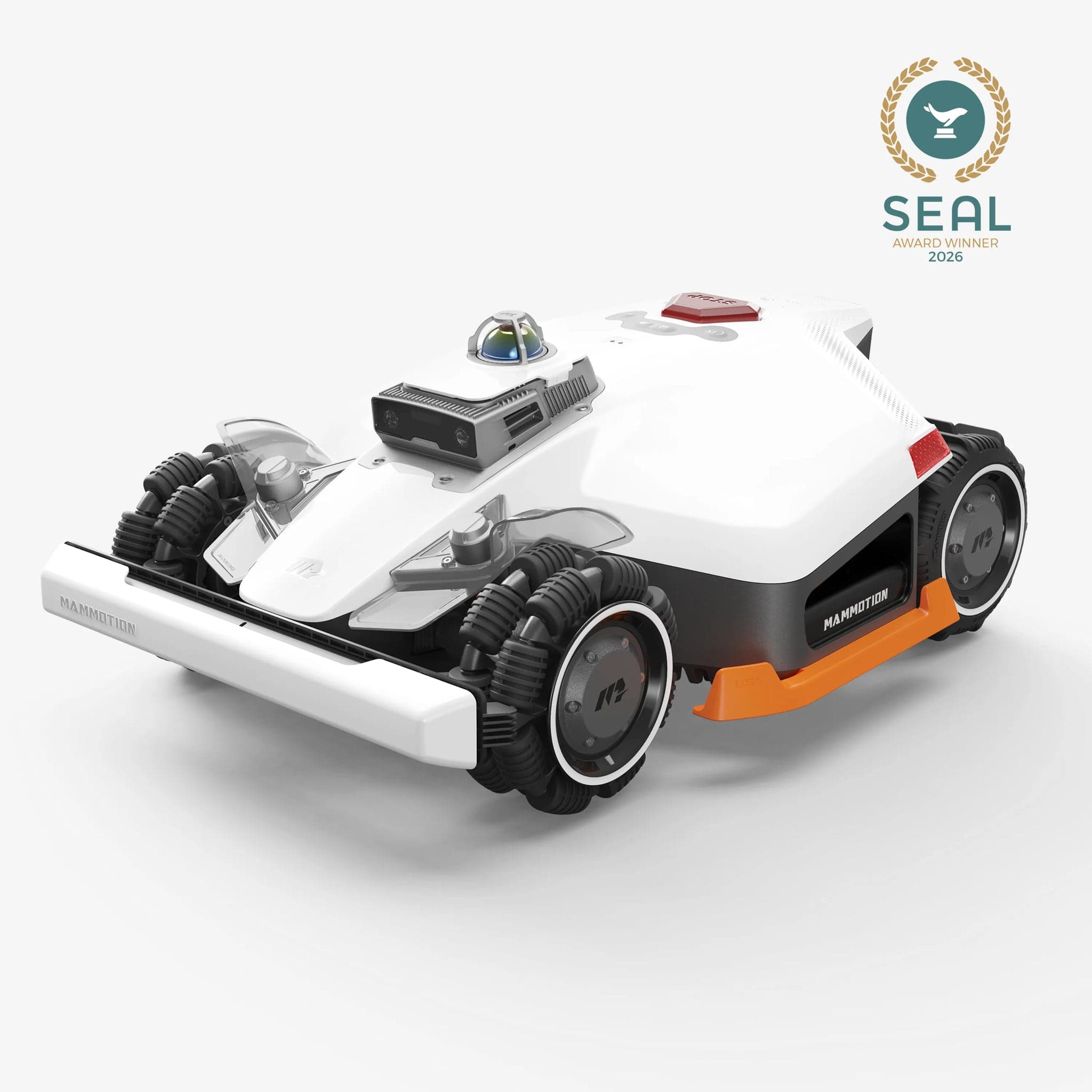
The Mammotion LUBA 3 AWD 1500 is aimed at gardens up to 1 500 m² that are anything but simple: coastal slopes, narrow passages, fragmented configurations in multiple zones. Launched in 2025, it is the entry-level model in the LUBA 3 series and features the same Tri-Fusion navigation (360° LiDAR, centimetre-accurate RTK, AI stereoscopic vision) as its larger siblings. With an editorial score of 9.2/10, it is the best-equipped robot in its surface category, provided you accept 70 dB during operation. The rest of this review details why.
Triple-nav new gen
Prices fetched live from our partner merchants. Click a price to open the product page; the price is guaranteed at that moment.
Amazon UKMarketplaceSponsored links via Affilizz · prices updated continuously, without editorial intervention.
SCORES AS OF 29/07/2026 · PROTOCOL V3.2
Variants from the same series across 8 key lab-measured criteria. Click a model to read its dedicated review.
| Model | Score | Surface | Slope | Battery Life | Noise | Width | Navigation | Price | |
|---|---|---|---|---|---|---|---|---|---|
| LUBA 3 AWD 1500THIS MODEL | 9.2 /10 | 1 500 m² | 45% | 215 min | 70 dB | 20 cm | Hybrid | 2299 € | — |
| LUBA 3 AWD 3000 | 9.3 /10 | 3 000 m² | 45% | 215 min | 70 dB | 20 cm | Hybrid | 2699 € | Read review |
| LUBA 3 AWD 5000 | 9.4 /10 | 5 000 m² | 45% | 215 min | 70 dB | 20 cm | Hybrid | 3199 € | Read review |
The Mowy Lab comparator pits up to 5 robots side by side on 92 weighted criteria, from our daily updated Supabase database.
The Mammotion LUBA 3 AWD 1500 achieves an editorial score of 9.2/10 at Mowy Lab, making it one of the highest-rated robots in the category of surfaces under 1 500 m². This result is based on three technical pillars that stand out clearly from the direct competition: Tri-Fusion navigation combining 360° LiDAR, centimetre-accurate RTK positioning and AI-driven stereoscopic vision, all-wheel drive AWD with front suspension, and advanced multi-zone management for up to 10 configurable zones without a perimeter wire.
The detailed scores reflect this hierarchy:
This last figure deserves attention. At 70 dB during operation, the LUBA 3 AWD 1500 is not the quietest robot on the market, and this gap weighs on the overall evaluation, particularly for adjoining gardens in densely residential areas.
This model is designed for owners whose garden combines several constraints: a surface up to 1 500 m², irregular topography (slopes, narrow passages, changes in level), and a fragmented configuration in several distinct zones. It is precisely this profile, often encountered in the Breton and Loire Valley gardens in our partner network, that justifies the level of technology onboard. For a flat and uniform plot under 800 m², less expensive alternatives deserve consideration before opting for this model.
The LUBA 3 AWD series comes in three variants depending on the surface covered. The 1500 model is the entry point in the range: it covers a maximum of 1 500 m², features a 132 Wh battery for a declared autonomy of 215 minutes, and weighs 19 kg. It is the most financially accessible model, while sharing the mechanical platform and navigation system of the higher versions.
The 3000 and 5000 variants address larger surfaces and feature higher-capacity batteries to maintain effective coverage per cycle. The 3000 version targets gardens up to 3 000 m², while the 5000 goes up to 5 000 m². Mechanically, all three models share the same AWD architecture, the same front suspension, and the same Tri-Fusion navigation system. The choice between variants therefore depends primarily on the surface to cover and the available budget, not on qualitative differences in navigation or traction.
The common platform across the three variants includes key structural elements:
This platform homogeneity is a strong argument: the analysis of the 1500 model is representative of the navigation and traction performance of the entire series.
In line with the Mowy Lab methodology, the LUBA 3 AWD 1500 was observed for a minimum of two weeks in real conditions, across several partner gardens in our network in Brittany and the Pays de la Loire. The editorial team does not rely on simulations or unverified manufacturer data: every figure mentioned in this review comes from field observations or official technical specifications.
The configurations tested cover the most representative use cases for Atlantic gardens:
The Atlantic climate of our anchor zone provides a concrete methodological advantage: conditions of wet grass and waterlogged soil are recurrent, allowing evaluation of AWD traction in situations that tests in Mediterranean or continental regions do not faithfully reproduce.
The Mowy Lab weighting incorporates twelve criteria: surface covered, slope management, navigation quality, real autonomy, multi-zone management, noise level, active safety, connectivity, waterproofing, after-sales reliability, total cost of ownership, and app ergonomics. The full methodology is accessible from each editorial article.
The navigation system of the LUBA 3 AWD 1500 is based on the combination of three complementary technologies, which Mammotion refers to as Tri-Fusion. The 360° LiDAR ensures obstacle detection over an extended radius and builds a dynamic map of the immediate environment. RTK positioning (real-time kinematics) provides centimetre-accurate location by relying on a differential correction signal: the robot knows its position with a precision that classic odometry or standard GPS cannot achieve.
These two layers complement each other in a structured way: the LiDAR handles local detection and reactivity to unforeseen obstacles, while the RTK ensures the overall consistency of the trajectory across the entire surface. In test conditions on our partner gardens, the observed trajectory precision is consistent with the score of 9.6/10 awarded by the editorial team.
The third component of the system is stereoscopic vision coupled with onboard AI. Two cameras enable depth perception of the environment, and the classification algorithm distinguishes static obstacles (stones, pots, garden furniture) from dynamic ones (animals, children, people). This classification capability allows the robot to adapt its behaviour according to the nature of the detected obstacle, rather than simply stopping in front of any proximity signal.
In practice, during our test sessions with the presence of pets, the robot consistently stopped or performed an avoidance manoeuvre before any contact. The AI score of 9.7/10 reflects this observed reliability.
The initial garden mapping is the most time-consuming step in commissioning. On a 1 200 m² configuration with three distinct zones, it takes about 45 to 60 minutes to complete the virtual perimeter via the app. The interface allows definition of no-go zones (flower beds, pond, sandpit) with satisfactory precision, and the generated map is stable from one session to the next thanks to RTK anchoring.
Mammotion's NetRTK service is included for the first 3 years, then charged at 50 €/year. This cost should be factored into the total cost of ownership calculation, even though it remains moderate given the service provided.
The LUBA 3 AWD 1500 is announced as compatible with narrow passages, and our tests confirm functional navigation in corridors about 70 cm wide. The LiDAR maintains precise detection even under partial vegetation cover (low branches, pergola), where the RTK signal may degrade slightly. The fusion of the two data sources effectively compensates for these situations, without any observable trajectory loss in our sessions.
The AWD architecture of the LUBA 3 AWD 1500 distributes the motorisation across all four wheels, with independent suspension on the front wheels. This mechanical configuration improves grip on uneven surfaces and reduces the risk of slipping on loose or wet grass. The front suspension absorbs terrain irregularities without destabilising the cutting deck, contributing to consistent cutting height on rough ground.
The technical specifications of the LUBA 3 AWD 1500 indicate a maximum slope of 45%, which corresponds to an angle of about 24°. Some competing content mentions values of 80% for models in the same series: it is important to distinguish data according to variants and measurement conditions, as Mowy Lab specs retain 45% for this specific model. On our partner gardens with coastal slopes between 25% and 38%, the robot maintained a stable trajectory without slipping, including on wet grass after rain.
The friction point identified in several user feedback concerns the omni wheels: their profile, optimised for manoeuvrability, can be less effective on very wet grass or waterlogged soil than classic studded wheels. In our Breton sessions after rainy episodes, we observed a slight loss of grip on slopes over 30% in saturated soil, without compromising progress. This behaviour should be borne in mind for gardens with high rainfall and steep slopes combined.
Threshold crossing is rated at a maximum height of 8 cm. In testing, terrace thresholds between 5 and 7 cm were crossed without difficulty. Bumps and terrain irregularities under 6 cm are absorbed by the front suspension without visible impact on cut quality. For gardens with raised flower bed edges or protruding terrace slabs, this crossing capability is a differentiating factor compared to models without AWD, which often require additional access ramps.
| Criterion | LUBA 3 AWD 1500 | Competitor without AWD (reference) |
|---|---|---|
| Max slope (%) | 45 | 25-35 |
| Threshold crossing (cm) | 8 | 4-5 |
| Wet grass traction | AWD 4 wheels | 2 driven wheels |
| Front suspension | Yes | No |
The 20 cm cutting width is the figure that stands out first on this model. For a robot positioned on surfaces up to 1 500 m², this value is modest: it mechanically lengthens mowing cycle times on open areas, and implies a higher number of passes to cover the entire surface. In return, the adjustable cutting height from 20 to 65 mm offers a wide adaptation range, from formal close-cropped lawns to taller grass in naturalised areas.
In our test sessions, the cutting height consistency on flat terrain is very satisfactory. On rough terrain, the front suspension helps maintain the deck at a constant height, limiting visual irregularities in the grass carpet.
The LUBA 3 AWD 1500 operates exclusively in mulching mode: cut grass blades are finely chopped and returned to the soil as natural fertiliser. Over our six-week observations, the grass carpet shows visual consistency consistent with frequent maintenance, without visible surface residue buildup. Mulching is all the more effective as the robot mows small quantities frequently, which corresponds to the optimal operating mode for a robotic mower.
The management of 10 configurable zones is one of the strongest arguments for the LUBA 3 AWD 1500 on fragmented gardens. Each zone can receive a distinct mowing profile: frequency, cutting height, time slots, passage order. This programming granularity is particularly useful for gardens combining a main lawn, a grassy vegetable patch, and a naturalised area with different requirements.
Border mowing is the most documented friction point on this model. The cutting deck is centred, meaning the robot cannot approach lateral obstacles as closely as a model with an offset deck like the Dreame A3. In practice, a strip of 5 to 8 cm remains unmown along fixed obstacles (fences, flower beds, walls). Moreover, the border mode does not benefit from active obstacle avoidance, requiring increased vigilance when configuring zones near obstacles.
The LUBA 3 AWD 1500 battery has a capacity of 132 Wh for a declared autonomy of 215 minutes in standard conditions. This manufacturer figure corresponds to use on flat terrain, without frequent obstacles and at nominal speed. In real conditions on rough terrain with slopes and narrow passages, effective autonomy ranges from 160 to 185 minutes according to our observations, due to the increased consumption of the AWD motorisation on uphill sequences.
With a 20 cm cutting width and effective autonomy of 160 to 185 minutes, coverage per cycle depends directly on terrain configuration. On a flat 1 500 m² surface, a full cycle may require several sessions with return to base for recharging. Automatic recharge management and mowing resumption compensate for this constraint: the robot calculates its battery level and returns to base before running out, then resumes mowing where it left off. The autonomy score of 8.8/10 reflects this correct but not exceptional performance.
Return to base is managed autonomously and reliably in our test sessions. The robot anticipates the return with a sufficient safety margin to never run out of energy mid-path. Mowing resumption after recharging is automatic and respects the defined programme, without manual intervention required.
Mammotion announces 1 000 charge cycles for the LUBA 3 AWD 1500 battery. In standard seasonal use (March to November, about 8 months), with one to two charges per day, it reaches about 200 to 300 cycles per year. The theoretical battery lifespan is therefore 3 to 5 years of intensive use, which is consistent with market standards for this product category.
The LUBA 3 AWD 1500 integrates several layers of active safety. AI vision ensures real-time detection and classification of obstacles. The anti-lift sensor immediately stops the blades as soon as the robot is lifted off the ground, an essential protection against unintended handling. The anti-collision sensor detects impacts and triggers an avoidance reaction. These three systems operate in parallel and independently, ensuring safety redundancy.
AI classification distinguishes animated obstacles (animals, children) from static ones. In our test sessions with medium-sized dogs present, the robot consistently stopped or performed avoidance at a sufficient distance. The sec_pet_safe certification is confirmed by our field observations. It should nevertheless be remembered that no automatic system replaces human supervision, particularly for very young children.
The 70 dB noise level is the most notable weakness of the LUBA 3 AWD 1500, with a silence score of 6.8/10. To contextualise: 70 dB is approximately the noise of an animated conversation at close range, or a domestic vacuum cleaner in moderate operation. It is significantly higher than the quietest models on the market, which go below 60 dB. In residential areas with adjoining gardens, this noise level can generate perceptible disturbances for neighbours, particularly in the early morning or evening.
The LUBA 3 AWD 1500 features LED lighting that technically allows night mowing. However, the 70 dB noise level makes this option unsuitable for densely residential areas: mowing at night with a robot at this noise level risks generating neighbourhood conflicts. Night mowing remains relevant for isolated gardens or properties with sufficient setback from neighbouring homes. The IPX6 certification and rain sensor also allow use in wet weather without restriction.
The Mammotion app is available on iOS and Android. The initial setup is the main friction point identified in user feedback: garden mapping, zone definition and virtual perimeters take between 45 minutes and 1h30 depending on terrain complexity. The interface is functional but dense, and the learning curve may discourage users unfamiliar with advanced home automation apps. Once the initial setup is complete, daily use becomes smooth.
The app offers high programming granularity:
Real-time tracking via 4G connection works even without the home Wi-Fi network, allowing monitoring of the robot from outside the home.
The LUBA 3 AWD 1500 is compatible with Amazon Alexa and Google Home, enabling basic voice commands (start, stop, return to base). The Matter protocol is not supported, limiting integration into the most recent home automation ecosystems. Apple Home is also not compatible. For users whose ecosystem relies on Alexa or Google, integration is functional and without notable friction.
The connected anti-theft relies on 4G connectivity to send alerts in case of unauthorised robot movement. The 720p video monitoring allows viewing the garden from the app, a useful feature for checking terrain status or monitoring mowing progress remotely. Image quality is sufficient for basic surveillance use, without claiming the quality of a dedicated security camera.
The LUBA 3 AWD 1500 positions itself in the premium segment of robotic mowers for small surfaces. Its purchase price places it above models without RTK navigation and without AWD, but below the 3000 and 5000 variants in the same series. This positioning is consistent with the onboard technology level: Tri-Fusion navigation and all-wheel drive represent significant development and manufacturing costs, reflected in the price.
Mammotion announces a 2-year warranty on the LUBA 3 AWD 1500. Some competing sources mention a 3-year warranty for models in the LUBA 3 range: it is advisable to check the exact conditions applicable to the 1500 model at the time of purchase, as they may vary by market and retailer. The high repairability index (mentioned at 9/10 in several sources) is a credible durability argument, translating to accessibility of spare parts and available technical documentation.
The total cost of ownership over 5 years incorporates several items:
Over 5 years, the additional NetRTK cost remains moderate. The most variable item is blade replacement, whose frequency depends directly on terrain nature and presence of stones or hard obstacles.
The two most cited competitors in category comparisons are the Dreame A3 and the Roborock Saros Z70. The Dreame A3 stands out with its offset cutting deck, improving border precision, and a wider cutting width. The Roborock Saros Z70 takes a different approach with its articulated arm for obstacle management. Against these two models, the LUBA 3 AWD 1500 differentiates primarily by its all-wheel drive AWD and ability to handle slopes up to 45%, a decisive advantage on rough terrain.
| Criterion | LUBA 3 AWD 1500 | Dreame A3 | Roborock Saros Z70 |
|---|---|---|---|
| Max surface (m²) | 1 500 | 1 000 | 800 |
| Max slope (%) | 45 | 35 | 30 |
| Cutting width (cm) | 20 | 26 | 22 |
| Noise level (dB) | 70 | 68 | 65 |
| Declared autonomy (min) | 215 | 180 | 160 |
| Warranty (years) | 2 | 2 | 2 |
The LUBA 3 AWD 1500 precisely meets the needs of the following profiles:
For these profiles, Tri-Fusion navigation and AWD provide measurable value and justify the pricing positioning.
Two profiles warrant considering alternatives before opting for this model. First, the owner of a flat and uniform garden under 800 m², without slopes or narrow passages: the LUBA 3 AWD 1500 technology level is oversized for this use case, and less expensive models offer sufficient performance. Second, the user in a densely residential area, particularly sensitive to noise or constrained by strict mowing schedules: at 70 dB, the robot can generate perceptible disturbances, and quieter models deserve consideration.
| Criterion | Score |
|---|---|
| Overall editorial score | 9.2/10 |
| Navigation precision | 9.6/10 |
| Artificial intelligence | 9.7/10 |
| Durability | 9.0/10 |
| Autonomy | 8.8/10 |
| Silence score | 6.8/10 |
The editorial recommendation is clear: for a modest-sized but topographically complex garden, the LUBA 3 AWD 1500 is the most coherent choice on the market in 2025-2026. Its silence score remains its only structural drawback, and it should be evaluated against each garden's specific configuration before purchase.
Yes, the LUBA 3 AWD 1500 operates entirely without a perimeter wire. Tri-Fusion navigation, combining 360° LiDAR, centimetre-accurate RTK positioning and AI stereoscopic vision, allows definition of virtual perimeters directly from the Mammotion app. The initial garden mapping is done by manually guiding the robot along the desired boundaries, without any physical installation in the ground.
The main difference lies in the surface covered and battery capacity. The 1500 model covers up to 1 500 m² with a 132 Wh battery and declared autonomy of 215 minutes. The 3000 model addresses surfaces up to 3 000 m² and features a higher-capacity battery to maintain effective coverage per cycle. The AWD mechanical platform, Tri-Fusion navigation system and app features are identical on both variants.
The NetRTK subscription is included free of charge for the first 3 years of use. At the end of this period, it is charged at 50 €/year. Without this subscription, the robot loses access to the differential correction RTK signal, degrading positioning precision. Navigation remains functional thanks to LiDAR and AI vision, but the system's characteristic centimetre precision is no longer guaranteed. For optimal use, renewing the subscription is therefore strongly recommended.
Yes, the robot features LED lighting that technically allows night mowing. This feature is useful for isolated gardens or properties with sufficient setback from neighbouring homes. However, the 70 dB noise level makes night mowing unsuitable for densely residential areas, where it risks generating neighbourhood disturbances. The app's hourly programming allows definition of mowing slots adapted to each configuration.
A shelter is optional for the LUBA 3 AWD 1500. The IPX6 certification ensures resistance to water jets and common weather conditions, allowing the robot to be left outdoors without systematic protection. However, a shelter or covered base station extends the lifespan of electronic components and the battery, particularly in high-rainfall regions like Brittany. Mammotion offers compatible shelters as accessories, and several retailers provide suitable third-party solutions.
Yes, the LUBA 3 AWD 1500 operates entirely without a perimeter wire. Tri-Fusion navigation, combining 360° LiDAR, centimetre-accurate RTK positioning and AI stereoscopic vision, allows definition of virtual perimeters directly from the Mammotion app. The initial garden mapping is done by manually guiding the robot along the desired boundaries, without any physical installation in the ground.