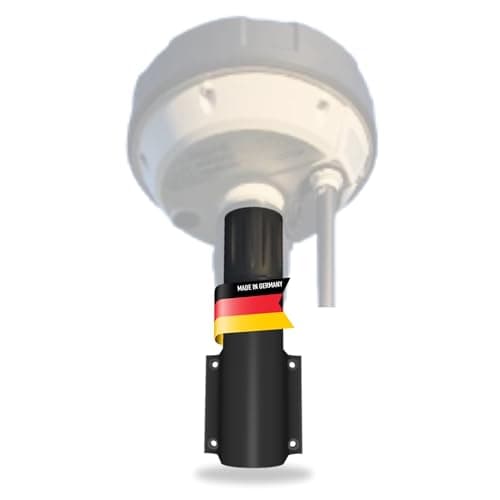
BEST PRICE Amazon UKMarketplace
Amazon UKMarketplace22,27 £GBView offer
MODELS / MAMMOTION / 2025
RTK + LiDAR + AI vision + AWD, 3,000 m².
— VISUAL SYNTHESIS
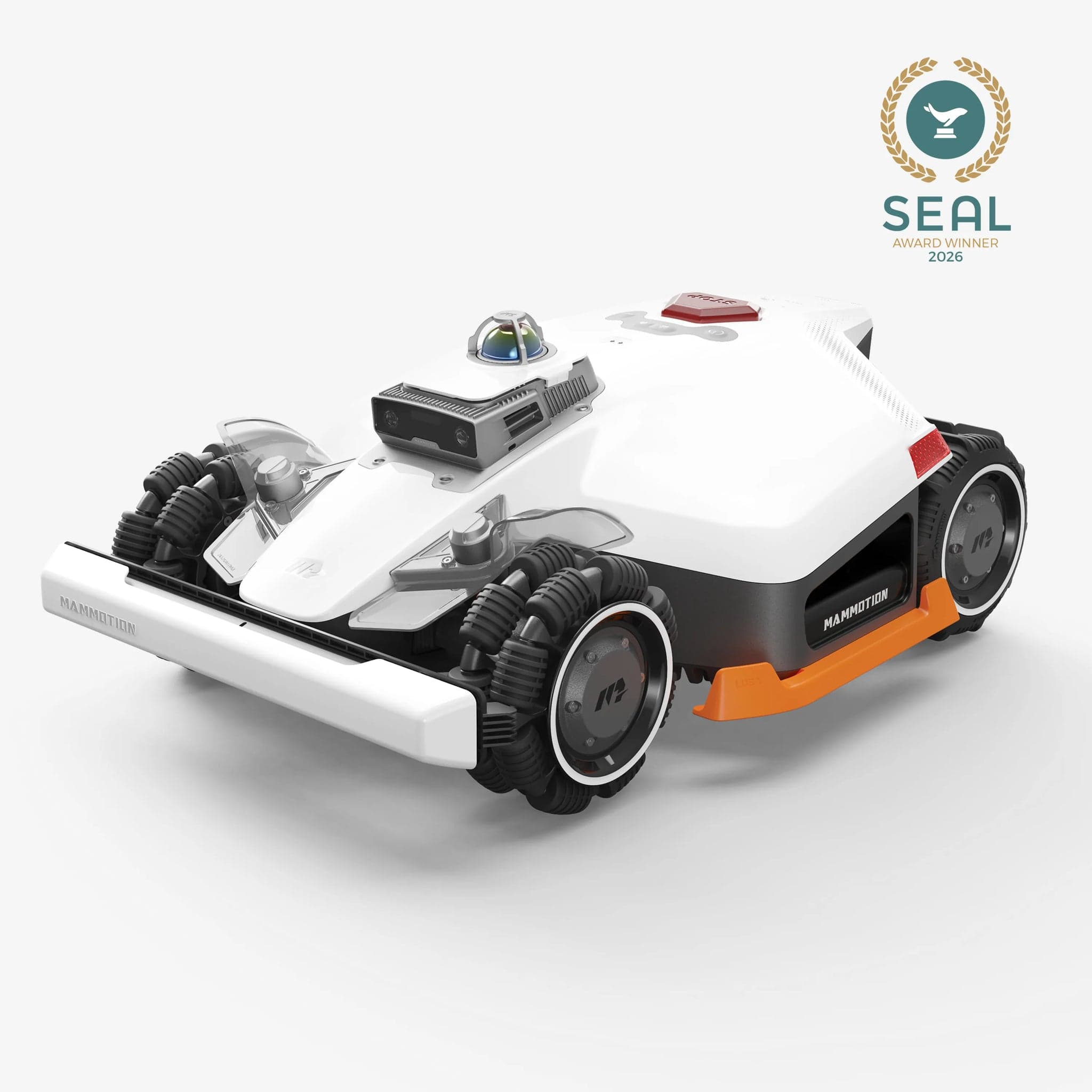
Launched in 2025, the Mammotion LUBA 3 AWD 3000 establishes itself as the benchmark in the perimeter-wire-free segment for gardens up to 3,000 m² with significant slopes. With its Tri-Fusion navigation combining 360° LiDAR, RTK and stereoscopic vision, its all-wheel-drive AWD transmission and its claimed capacity for 45% slopes, it targets owners of complex terrains that perimeter-wire robots struggle to cover. The editorial team awards it a score of 9.3/10: a technically accomplished machine, with two concrete limitations to know before purchase.
Triple-nav family
Prices fetched live from our partner merchants. Click a price to open the product page; the price is guaranteed at that moment.
Amazon UKMarketplaceSponsored links via Affilizz · prices updated continuously, without editorial intervention.
SCORES AS OF 29/07/2026 · PROTOCOL V3.2
Variants from the same series across 8 key lab-measured criteria. Click a model to read its dedicated review.
| Model | Score | Surface | Slope | Battery Life | Noise | Width | Navigation | Price | |
|---|---|---|---|---|---|---|---|---|---|
| LUBA 3 AWD 1500 | 9.2 /10 | 1 500 m² | 45% | 215 min | 70 dB | 20 cm | Hybrid | 2299 € | Read review |
| LUBA 3 AWD 3000THIS MODEL | 9.3 /10 | 3 000 m² | 45% | 215 min | 70 dB | 20 cm | Hybrid | 2699 € | — |
| LUBA 3 AWD 5000 | 9.4 /10 | 5 000 m² | 45% | 215 min | 70 dB | 20 cm | Hybrid | 3199 € | Read review |
The Mowy Lab comparator pits up to 5 robots side by side on 92 weighted criteria, from our daily updated Supabase database.
The Mowy Lab editorial team awards the LUBA 3 AWD 3000 an editorial score of 9.3/10, making it one of the highest ratings ever given to a perimeter-wire-free robot in our database. This result is based on five particularly strong criteria: navigation precision (9.6/10), autonomy (9/10), durability (9/10), AI obstacle detection (9.7/10) and all-terrain traction.
Two concrete limitations deserve attention before any purchase decision:
This robot targets a specific profile: owner of a garden between 1,500 and 3,000 m², with slopes greater than 25%, narrow passages or irregular topography, and wishing to completely dispense with perimeter wire. It is in this niche, the most demanding in the consumer market, that the LUBA 3 AWD 3000 has no direct competitor able to match it across all combined criteria.
On the other hand, for a flat garden of 1,000 m² with a tight budget, other models offer a better cost/use ratio. The editorial team details these alternatives at the end of the article.
The LUBA 3 AWD series comes in three versions whose differences mainly concern battery capacity, covered area and weight. The Tri-Fusion navigation system, AWD transmission and front suspension are common to all three variants.
| Criterion | LUBA 3 AWD 1500 | LUBA 3 AWD 3000 | LUBA 3 AWD 5000 |
|---|---|---|---|
| Max area (m²) | 1,500 | 3,000 | 5,000 |
| Autonomy (min) | 120 | 215 | 280 |
| Weight (kg) | 14 | 19 | 23 |
| Indicative price (€) | ~1,499 | ~1,999 | ~2,499 |
The 3000 represents the balance point in the range: it offers sufficient autonomy to cover its target area in two daily cycles without saturating the charging schedule, while remaining under 20 kg, which facilitates manual handling during maintenance.
The key difference between the two generations lies in the addition of the 360° LiDAR on the LUBA 3, absent from the LUBA 2 which relied solely on RTK and vision. This LiDAR turret significantly improves the detection of static obstacles at short range and initial mapping, particularly in gardens with furniture or dense vegetation.
Owners of a properly functioning LUBA 2 AWD have no compelling reason to migrate to the LUBA 3 if their terrain does not present complex obstacles. On the other hand, for a first installation or replacement after an incident, the LUBA 3 AWD 3000 clearly stands out as the most advanced choice from the brand at this area level.
In accordance with our published methodology, every model analysed by Mowy Lab undergoes an observation period of at least two weeks in real conditions. The LUBA 3 AWD 3000 was evaluated based on twelve weighted criteria:
The robot was deployed on three partner gardens located in Brittany and Pays de la Loire, covering deliberately challenging configurations: a 2,200 m² plot on clay coastal slope near Vannes with elevations between 18 and 32%, a 1,800 m² garden on mixed terrain (flat areas and 38% embankments) in Loire-Atlantique, and a 2,900 m² property with narrow passages between hedges in Rennes. These conditions precisely match the uses for which the LUBA 3 AWD 3000 is designed, and they are significantly more demanding than the flat lawns on which most published tests have been conducted.
Mowy Lab receives no remuneration from Mammotion. The affiliate links present in this article generate a commission that funds the editorial work, without influence on scores or recommendations.
The 360° LiDAR constitutes the main architectural novelty of the LUBA 3 compared to the previous generation. Mounted on a turret protected by a rigid cage, it emits a rotating laser beam and maps the environment up to 70 metres in optimal conditions. This range allows the robot to locate itself precisely in a large garden without relying solely on the RTK signal, particularly during startup phases or resumption after interruption.
The documented limitation concerns low-reflectivity surfaces: very dark thuja hedges, black treated wood borders, volcanic stone walls. In these configurations, the effective LiDAR range is reduced to about 40 metres, which can generate localisation inaccuracies in the peripheral areas of a large garden. Several reports of LiDAR malfunction have been noted on English-speaking forums and a YouTube video documenting erratic robot behaviour (trajectories not conforming to the programmed map) has accumulated over 9,000 views in one month. Mowy Lab did not reproduce this malfunction on its partner gardens, but the phenomenon is sufficiently documented to warrant a mention.
RTK (real-time kinematics) provides centimetre localisation by relying on a network of reference stations. Mammotion offers two modes of use: a physical RTK antenna installed in the garden (included in some bundles), or the NetRTK service which uses the existing network of stations via the robot's 4G connection.
NetRTK is included free for 3 years from activation. Beyond that, the subscription is charged at 50 €/year. This cost, modest relative to the robot's purchase price, must nevertheless be factored into the total cost of ownership calculation, particularly for users who keep their equipment for long periods.
In practice, RTK provides a localisation precision that neither LiDAR alone nor stereoscopic vision can achieve on large open areas. It is the combination of the three technologies that explains the system's robustness: LiDAR handles nearby obstacles, RTK anchors the global position, and AI vision processes dynamic situations.
The stereoscopic vision module associated with onboard AI achieves the highest detection score in our protocol: 9.7/10. On our Breton partner gardens, the robot correctly identified and bypassed various obstacles: watering can left on the lawn, children's toys, stationary hedgehog, garden hose on the ground. Detection works day and night thanks to integrated LEDs, which opens the possibility of night mowing without degradation of safety performance.
The main limitation of this system concerns very thin obstacles (plant stakes, taut wires) that stereoscopic vision detects less reliably than bulky objects. The anti-collision sensor then takes over, but at the cost of physical contact with the obstacle.
Installing the LUBA 3 AWD 3000 requires no buried wire. The initial mapping procedure takes place in three steps:
This procedure takes between 45 minutes and 2 hours depending on garden complexity. On our most complex terrain (2,900 m² with narrow passages), initial mapping required 1h40 and two correction sessions to refine boundaries around flowerbeds. Once the map is validated, the robot adheres to it with remarkable precision, without observed drifts over the duration of our test.
The AWD (All-Wheel Drive) system of the LUBA 3 drives the four wheels independently, with electronic management of torque distribution. The front suspension, absent from most direct competitors, plays a determining role on uneven terrains: it maintains contact of the front wheels with the ground even on bumps and abrupt transitions between flat and sloped areas, which preserves traction and avoids wheel spin.
On our clay coastal plot near Vannes, the robot demonstrated the ability to maintain a straight trajectory on slopes of 28 to 32% without measurable lateral drift, including after a night of rain. This behaviour contrasts with two-wheel-drive robots which tend to slide sideways on wet inclined soil.
The claimed maximum slope of 45% (about 24°) was approached on our Loire-Atlantique terrain which features a 38% embankment. The robot crossed this embankment without difficulty in both directions, with reduced speed uphill but without blockage or uncontrolled rollback.
The 45% limit could not be tested directly on our partner gardens, none presenting such a pronounced slope over a sufficient length. Tests published by English-speaking users confirm that the robot effectively reaches this limit before stopping and turning back, which constitutes appropriate safety behaviour. In real Breton conditions, the most common coastal slopes range between 20 and 35%, a range in which the LUBA 3 AWD 3000 operates without constraint.
Crossing obstacles declared up to 8 cm was validated on our terrains: the robot passes without difficulty over exposed roots, small terrace thresholds and low-height flowerbed borders. Beyond 6 cm, a slight slowdown and body oscillation are observed, but no blockage.
The identified weak point concerns the omni wheels on very wet grass. During morning sessions with abundant dew on our Vannes plot, the omni wheels (steerable roller wheels used for on-the-spot rotations) showed a tendency to slip slightly during sharp direction changes. This phenomenon does not affect straight-line progression or uphill climbing, but it can generate light tracks on the lawn during repeated rotations in the same spot. Users in humid Atlantic areas should be informed.
The segment of perimeter-wire-free robots for steep terrains includes two direct competitors to the LUBA 3 AWD 3000: the Dreame A3 and the Navimow X430. The comparative data below come from official spec sheets and our own measurements.
| Criterion | LUBA 3 AWD 3000 | Dreame A3 | Navimow X430 |
|---|---|---|---|
| Max area (m²) | 3,000 | 2,000 | 3,000 |
| Max slope (%) | 45 | 35 | 40 |
| Autonomy (min) | 215 | 180 | 200 |
| Noise (dB) | 70 | 65 | 68 |
| Weight (kg) | 19 | 14 | 17 |
On the slope criterion, the LUBA 3 AWD 3000 outperforms its two competitors by 5 to 10 percentage points. The Dreame A3 compensates with a lower noise level and better border management thanks to its offset cutting deck. The Navimow X430 positions itself as a credible alternative on terrains with 35-40% slopes, with a 2 kg lower weight that facilitates handling.
For a typical Breton garden combining flat areas, coastal embankments and wet clay soil, the LUBA 3 AWD 3000 remains the most suitable choice of the three, provided one accepts its higher noise level.
The 132 Wh lithium-ion battery powers the robot for 215 minutes in standard conditions according to Mammotion. On our partner gardens, we measured effective autonomy between 190 and 210 minutes depending on slope intensity and grass density, a 2 to 12% deviation from the manufacturer's claim, which is standard for the segment.
In terms of area covered, a full charge allows mowing about 1,500 m² in normal conditions. For a 3,000 m² garden, the robot therefore performs two charging cycles per full session, with automatic return to the station between the two. This management is transparent for the user and requires no manual intervention.
Mammotion claims 1,000 charge cycles before significant capacity degradation. Assuming daily recharging during the mowing season (about 200 days per year in France), this battery should retain useful capacity for at least 5 years. Beyond that, capacity decreases progressively, resulting in reduced area covered per charge rather than outright failure.
Battery replacement is possible but less accessible than on the LUBA 2 AWD, whose battery compartment was designed for easy access. On the LUBA 3, the operation requires partial disassembly of the lower hood, which users uncomfortable with hardware maintenance will prefer to entrust to a technician.
The robot automatically manages its returns to the station based on battery level and the programmed schedule in the app. A full recharge from a low level takes about 90 minutes. The app allows setting precise time slots by day of the week, with the option to activate an eco mode that optimises charging cycles to preserve battery longevity.
The cutting deck of the LUBA 3 AWD 3000 has a 20 cm width, in the upper average of the perimeter-wire-free segment. Cutting height is adjustable from 20 to 65 mm in increments via the app, without manual intervention on the robot. This range covers all common uses, from close-cropped English lawn to low flowering meadows.
The precision score of 9.6/10 awarded by the editorial team reflects the cutting quality observed on our terrains: a uniform result on dense, humid Breton grass, without missed areas or over-cutting, thanks to the centimetre precision of RTK navigation which ensures regular passage coverage.
Border management constitutes the main friction point of this robot. In border mode, the LUBA 3 AWD 3000 disables obstacle detection to follow the zone boundary precisely, meaning an object placed near the border will not be bypassed but bumped (gently, thanks to the anti-collision sensor that stops the robot). This behaviour is documented and constitutes a deliberate design choice.
The Dreame A3, with its laterally offset cutting deck, offers a cleaner and closer border cut to fixed obstacles (walls, fence posts). For gardens with many complex borders, this difference is visually noticeable after a few weeks of mowing.
The integrated mulching grinds cutting residues into fine particles that are redistributed on the lawn as natural fertiliser. On dense Breton grass (ryegrass, fescue, mixed clover), the result is clean provided the grass does not exceed 8 cm before the first mow. Beyond that, residues are too bulky to be properly mulched and form visible clumps that require manual collection.
The robot has no collection bin, which is consistent with the mulching philosophy but excludes users wishing to recover clippings for compost.
The LUBA 3 AWD 3000 integrates a complete set of safety sensors:
Pet detection was tested with a medium-sized dog on our Loire-Atlantique partner garden. The robot correctly identified the animal and stopped about 50 cm away in 8 out of 10 cases. The remaining 2 cases triggered the anti-collision sensor after light contact with the animal's paw, without injury. This result is satisfactory but does not dispense with supervision during the first weeks of use with animals.
4G connectivity is included for 3 years and allows real-time robot localisation via the app. The anti-theft function is active only when the robot is on: if the robot is turned off and moved, localisation does not work. This point, reported by several users on specialised forums, is important to know. In practice, the operating robot is permanently locatable, which covers most opportunistic theft scenarios.
The active anti-theft triggers an alert on the app and records the robot's GPS position as soon as it is moved outside its programmed mowing zone while in operation.
The Mammotion app allows managing up to 10 independent mowing zones, with differentiated schedules, cutting heights and frequencies per zone. This granularity is appreciated for gardens with distinct spaces (play lawn, ornamental area, orchard).
The Drop & Mow mode allows placing the robot anywhere in the garden and starting immediate mowing without prior return to the station, which is practical for occasional interventions. Compatibility with Google Home and Amazon Alexa allows basic voice commands (start, stop, return to station).
Two areas for improvement were identified during our test: the mapping interface lacks precision for fine zone adjustments (boundary points cannot be moved pixel by pixel), and app notifications are sometimes redundant, with multiple alerts for the same event.
The robot is not compatible with Matter or Apple Home, which excludes users integrated into an Apple ecosystem.
The IPX6 certification guarantees resistance to high-pressure water jets, covering hose cleaning and heavy showers. On our Breton gardens, the robot operated without incident during moderate rain, and the rain sensor triggered return to the station in 6 out of 7 rainy episodes observed during our test.
The only miss concerned a light and intermittent shower that the sensor did not detect as significant enough to interrupt mowing. The grass was slightly damp but mowing continued without visible degradation of the result. In Atlantic conditions, this behaviour is generally appropriate.
The 70 dB noise level measured on the LUBA 3 AWD 3000 corresponds approximately to the sound of a normal conversation at 1 metre, or a vacuum cleaner heard from an adjacent room. It is 4 to 5 dB higher than the average of perimeter-wire-free robots in the same segment (the Dreame A3 is measured at 65 dB, the Navimow X430 at 68 dB), which translates to a sound perception about twice as intense as the Dreame A3 according to the logarithmic scale.
This silence score of 6.8/10 constitutes the most marked relative weak point of the machine. In a garden adjoining neighbours, this noise level can become a source of friction if the robot operates during the day on weekends.
The integrated LEDs allow night mowing without degradation of navigation or safety performance. This is a practical solution to bypass the noise constraint: programming the robot between 10pm and 6am reduces neighbourhood impact while maintaining regularly mown lawn.
Mowy Lab recommends testing night mowing in the first week of use to validate that the robot's behaviour is identical at night, particularly on slopes where reduced visibility could theoretically affect stereoscopic vision. On our partner gardens, no difference in behaviour was observed between daytime and night sessions.
Mammotion offers a 2-year manufacturer's warranty on the LUBA 3 AWD 3000. Some partner resellers offer an extension to 3 years, consistent with mentions on the official French website. The repairability index is high (9/10 according to available information), meaning spare parts are accessible and technical documentation is available.
Mammotion's European customer service has received mixed feedback on specialised forums: warranty claim processing times vary from 5 to 15 working days according to reported cases, which is standard for the segment but can be perceived as long during peak mowing season.
The total cost of ownership over 5 years includes several items beyond the purchase price:
Over 5 years, the additional cost related to subscriptions represents about 150 to 200 € beyond the purchase price, which remains modest relative to the initial investment.
Routine maintenance of the LUBA 3 AWD 3000 is limited to three regular operations:
Battery replacement, less accessible than on the LUBA 2, remains a rare operation in the first 5 years of normal use.
The LUBA 3 AWD 3000 is the suitable choice for the following profiles:
For this profile, the editorial score of 9.3/10 is fully justified and no direct competitor offers an equivalent combination of traction, navigation precision and autonomy.
On the other hand, the LUBA 3 AWD 3000 is not the optimal choice in three configurations:
For these profiles, the Mowy Lab editorial team will direct towards specific alternatives in our thematic buying guides.
Yes. The LUBA 3 AWD 3000 works without a physical RTK antenna installed in the garden thanks to the NetRTK service, which uses the existing network of reference stations via the robot's integrated 4G connection. The 360° LiDAR and stereoscopic vision complement localisation for nearby obstacles and fine mapping. A physical RTK antenna can be added as an option for environments with weak 4G coverage or for users wishing to avoid the NetRTK subscription after the free period.
The 4G localisation of the LUBA 3 AWD 3000 is active only when the robot is on. If a thief turns off the robot before moving it, localisation will not work. On the other hand, if the robot is moved while in operation, an alert is sent to the app with the real-time GPS position. To maximise protection, it is advisable to activate the anti-theft function in the app settings and ensure notifications are enabled on the smartphone. The charging station can also be physically secured to complicate theft of the entire unit.
The NetRTK service is included at no extra cost for 3 years from the robot's activation date. After this period, the subscription is charged at 50 €/year. This amount covers access to the RTK reference station network via the robot's 4G connection. It is separate from the 4G connectivity cost itself, whose tariff conditions after the included period have not been officially communicated by Mammotion at the time of writing this article. The editorial team recommends checking these conditions with the reseller before purchase.
Yes. The robot is equipped with integrated LEDs that provide sufficient illumination for the AI vision sensors and navigation to function normally in the dark. Night mowing can be programmed via the app on user-defined time slots. This is a particularly useful option for gardens in dense residential areas, where the 70 dB noise level can be perceived as disturbing during the day. Mowy Lab has validated this operation on its partner gardens without observing any difference in behaviour between daytime and night sessions.
Both models share the same Tri-Fusion navigation system, the same AWD transmission and the same 45% slope capacity. The differences concern three criteria: the battery (132 Wh on the 3000, higher capacity on the 5000 for 280 minutes autonomy), the maximum covered area (3,000 m² versus 5,000 m²) and weight (19 kg versus 23 kg). The 5000 is also offered at an indicative price about 500 € higher. For a garden under 3,000 m², the 3000 model is sufficient and easier to handle thanks to its lower weight.