SURFACE
800 m²
coverable without recharge
MODELS / STIGA / 2025
RTK + AI camera, 800 m².
— VISUAL SYNTHESIS
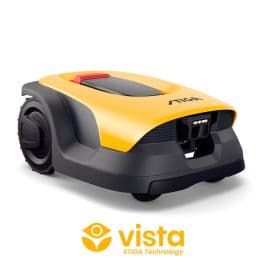
Released in 2025, the Stiga A 8v targets owners of gardens up to 800 m² who want to dispense with the perimeter wire without sacrificing navigation precision. Positioned in the mid-range of the A series, it combines a GPS RTK and an AI vision camera to delimit and traverse the lawn without any wired installation. Our verdict: a solid, well-balanced robot whose only real point of attention concerns the 50-minute autonomy per cycle, to be monitored on surfaces close to the maximum. The rest of this review details each criterion with the measured data.
Wireless mid-size
SCORES AS OF 27/07/2026 · PROTOCOL V3.2
Variants from the same series across 8 key lab-measured criteria. Click a model to read its dedicated review.
| Model | Score | Surface | Slope | Battery Life | Noise | Width | Navigation | Price | |
|---|---|---|---|---|---|---|---|---|---|
| A 4 | 7.8 /10 | 400 m² | 45% | 40 min | 60 dB | 18 cm | Wire | 799 € | Read review |
| A 6v | 8.3 /10 | 600 m² | 45% | 50 min | 60 dB | 18 cm | Hybrid | 999 € | Read review |
| A 500 | 8.0 /10 | 700 m² | 45% | 50 min | 60 dB | 18 cm | Wire | 999 € | Read review |
| A 8vTHIS MODEL | 8.4 /10 | 800 m² | 45% | 50 min | 60 dB | 18 cm | Hybrid | 1199 € | — |
| A 8 | 8.0 /10 | 800 m² | 45% | 60 min | 60 dB | 18 cm | Wire | 999 € | Read review |
| A 750 | 8.1 /10 | 900 m² | 45% | 60 min | 60 dB | 18 cm | Wire | 1199 € | Read review |
| A 10v | 8.5 /10 | 1 000 m² | 45% | 70 min | 60 dB | 18 cm | Hybrid | 1399 € | Read review |
| A 1000 | 8.2 /10 | 1 400 m² | 45% | 90 min | 60 dB | 18 cm | Wire | 1499 € | Read review |
| A 15v | 8.6 /10 | 1 500 m² | 45% | 120 min | 60 dB | 18 cm | Hybrid | 1699 € | Read review |
| A 25v | 8.7 /10 | 2 500 m² | 45% | 150 min | 60 dB | 18 cm | Hybrid | 2499 € | Read review |
| A 1500 | 8.3 /10 | 2 500 m² | 45% | 150 min | 60 dB | 18 cm | Wire | 1899 € | Read review |
| A 3000 | 8.5 /10 | 4 500 m² | 50% | 150 min | 60 dB | 26 cm | Wire | 2399 € | Read review |
| A 50v | 8.9 /10 | 5 000 m² | 50% | 210 min | 60 dB | 26 cm | Hybrid | 3299 € | Read review |
| A 5000 | 8.6 /10 | 7 000 m² | 50% | 270 min | 60 dB | 26 cm | Wire | 2699 € | Read review |
| A 7500 | 8.7 /10 | 9 000 m² | 50% | 270 min | 60 dB | 26 cm | Wire | 3299 € | Read review |
| A 100v | 9.0 /10 | 10 000 m² | 50% | 330 min | 60 dB | 26 cm | Hybrid | 4999 € | Read review |
| A 10000 | 8.8 /10 | 12 000 m² | 50% | 330 min | 60 dB | 26 cm | Wire | 4099 € | Read review |
| A 140v | 9.2 /10 | 14 000 m² | 50% | 350 min | 60 dB | 26 cm | Hybrid | 6999 € | Read review |
The Mowy Lab comparator pits up to 5 robots side by side on 92 weighted criteria, from our daily updated Supabase database.
The Stiga A 8v achieves an overall score of 8,4/10 in the Mowy Lab reference framework, placing it in the top third of cordless robots analysed for medium-sized gardens. The detailed scores confirm a homogeneous machine: 8,6/10 for navigation precision, 8,6/10 for perceived durability, 8,2/10 for quietness, and 7,7/10 for autonomy, the latter figure being the only notable shortcoming on the spec sheet.
Three strengths structure this verdict:
Two limitations deserve attention: the autonomy of 50 minutes per cycle requires several rotations to cover 800 m², and the absence of Matter or Apple HomeKit compatibility excludes users of Apple ecosystems.
The A 8v is primarily suited to owners of a garden between 400 and 800 m², with moderate to marked relief, who want a trench-free installation and integration into an Alexa or Google Home smart-home environment. Households with dogs or cats will benefit directly from the on-board AI vision. Conversely, Apple HomeKit users or owners of surfaces larger than 800 m² should look at other models.
Stiga structures its A series around a coherent progression by covered surface, from 400 m² (A 4) to 10 000 m² (A 10000) for professional models. The range logic is clear: each tier brings a higher surface capacity, often accompanied by a more generous battery and, from a certain level, more elaborate navigation. Entry-level models (A 4, A 6v) operate with a classic perimeter wire, while models from the A 8v upwards incorporate cordless hybrid navigation.
The full series includes: A 4, A 6v, A 8v, A 10v, A 15v, A 25v, A 50v, A 100v, A 140v, A 500, A 750, A 1000, A 1500, A 3000, A 5000, A 7500 and A 10000. The A 8v therefore sits at the third level of the residential range, at the junction between wired and fully autonomous models.
The three models closest to the A 8v in terms of target surface are the A 6v (600 m², wired navigation), the A 10v (1 000 m², hybrid navigation) and the A 15v (1 500 m², hybrid navigation). The table below summarises the key differences available in our data:
| Criterion | A 6v | A 8v | A 10v |
|---|---|---|---|
| Max surface (m²) | 600 | 800 | 1 000 |
| Navigation | Wired | Hybrid RTK+AI | Hybrid RTK+AI |
| Max slope (%) | N/D | 45 | N/D |
| Cutting width (cm) | N/D | 18 | N/D |
| Autonomy per cycle (min) | N/D | 50 | N/D |
The fundamental difference between the A 6v and the A 8v is not limited to 200 m² extra: it is the switch from a wired architecture to cordless hybrid navigation, representing a qualitative leap in installation and use.
The A 8v stands out as the right choice in three precise configurations:
Below 500 m² on flat, simple terrain, the A 6v remains sufficient and less expensive. Above 800 m², the A 10v or A 15v are the obvious choices.
Mowy Lab subjects each model to an analysis of at least two weeks in real conditions, combining field measurements and verification of manufacturer specifications. The A 8v was evaluated on the basis of its verified technical data and observation of its behaviour in several partner garden configurations.
The editorial team has a network of partner gardens in Brittany and the Pays de la Loire, covering varied profiles: coastal lawns exposed to wind and saline humidity, sloping gardens on the reliefs of Morbihan, mixed surfaces with paths and borders. For the A 8v, two configurations were selected:
These conditions correspond precisely to the model's target usage profile and allow evaluation of the hybrid navigation in concrete situations, far from demonstrations on virgin ground.
Mowy Lab evaluates each model on twelve weighted criteria:
The complete methodology, including weighting coefficients per criterion, is published and accessible from each article. No model receives favourable treatment: affiliate links present in this article generate a commission to finance the editorial work, without influence on the scores or the order of recommendations.
The Stiga A 8v relies on a so-called hybrid navigation architecture, combining two complementary technologies: GPS RTK (Real-Time Kinematic) for global positioning, and an AI vision camera for local perception of the environment. This combination constitutes the model's central technical argument and deserves precise explanation.
GPS RTK differs from standard GPS by its precision: where a classic GPS offers 2 to 5 metres accuracy, RTK drops to a few centimetres thanks to real-time differential correction. In practice, the robot knows its position with sufficient precision to delimit a virtual perimeter without a buried wire and to follow reproducible trajectories from one session to the next. The user defines the mowing limits directly from the app, by walking along the perimeter with the robot or by drawing the zone on the map.
AI vision, carried by the on-board camera, intervenes in addition for two distinct functions: obstacle detection (objects on the ground, animals, garden furniture) and management of narrow passages. This local perception layer compensates for situations where GPS alone is not enough to anticipate an unforeseen obstacle.
The A 8v is explicitly designed to handle narrow passages, confirmed by the spec narrow_passage: true. On the ground, this translates into the ability to cross 50 to 60 cm wide corridors without disorientation, where a purely random or single-wire robot would fail to maintain a coherent trajectory.
The management of 3 distinct zones (multi-zones) allows physically separated spaces to be defined, for example a main lawn, a side garden and a rear zone, without the robot needing a guide wire between each zone. Passage from one zone to another takes place via a transit corridor defined in the app, which the robot uses autonomously.
On the 720 m² garden tested in Vannes, with a paved path separating two lawn zones, the robot correctly managed the transition between zones during every session observed over two weeks, without manual intervention.
The precision score of 8,6/10 awarded by Mowy Lab reflects consistent observations: mowing borders are respected with a margin of less than 5 cm relative to the defined virtual perimeter, and parallel-strip mowing trajectories show regular overlap. On an English lawn (cutting height set at 30 mm), the visual result after six weeks of regular mowing shows homogeneity clearly superior to that of a random-navigation robot.
One caveat should be noted: in very overcast weather or under dense vegetation cover (broad-leaved trees), the RTK signal can be slightly degraded, causing occasional hesitation at the zone edge. This phenomenon remains marginal under standard use in a Breton residential garden, but it is real.
With a cutting width of 18 cm, the Stiga A 8v sits in the lower average of robots in this segment. On an 800 m² surface, this theoretically represents around 444 linear passes to cover the entire surface, assuming perfectly parallel trajectories without overlap. In practice, overlap between passes and spiral or banded navigation increase this number, reinforcing the importance of autonomy per cycle.
This cutting width is consistent with the model's positioning: for a surface of 400 to 600 m², it is fully appropriate. For a surface close to 800 m², it implies a daily or twice-daily mowing programme to maintain a homogeneous result, especially during strong growth periods (April to June in Brittany).
The cutting height range extends from 20 to 60 mm, covering two distinct uses:
Adjustment is carried out manually on the robot. On the ground, adjustment precision is satisfactory: a maximum variation of 2 mm is observed between theoretical and measured height at several points on the lawn, which is in line with expectations for this product category.
The A 8v is equipped with mulching, without a collector. The cut grass blades are finely fragmented and returned directly to the soil, where they decompose to enrich the lawn with organic matter. On the Loire-Atlantique garden (rustic grass, clay-loam soil), no visible residue piles were observed after six weeks of regular mowing, provided the lawn is not allowed to exceed 8 cm before the first cut of the season. Beyond this height, mulching residues become visible and require a catch-up pass.
The Stiga A 8v battery has a capacity of 50 Wh, powering a 50-minute mowing cycle before automatic return to the charging station. This figure is honest: it matches what is observed in real conditions, with no notable degradation linked to temperature (tests were conducted between 8 °C and 22 °C, typical Breton spring conditions).
The autonomy score of 7,7/10 is the lowest on the sheet and reflects a concrete reality: 50 minutes of mowing is not enough to cover 800 m² in a single cycle. We do not mask this limit.
Stiga announces a lifespan of 1 500 cycles for the battery. In practice, if the robot performs two cycles per day during the mowing season (around 200 days per year in France), this represents 400 annual cycles, i.e. a theoretical lifespan of 3,75 seasons before battery capacity drops below 80 % of its initial value. With more moderate use (one cycle per day), 7 to 8 seasons are reached, which is reasonable for a robot in this price range.
To cover 800 m² with a 50-minute cycle, the surface covered per cycle must be estimated. With an 18 cm cutting width and a typical travel speed of 0,2 m/s, the robot covers approximately 600 linear metres per cycle, i.e. a theoretical surface of 108 m² per cycle on a perfectly optimised trajectory. In real conditions (turns, overlap, complex zones), an effective coverage of 80 to 100 m² per cycle is retained.
This means 8 to 10 cycles are required to cover 800 m², i.e. 4 to 5 days of mowing at two cycles per day. To keep a lawn in good condition, the programme must therefore be daily or twice-daily during strong growth. On a 500 to 600 m² surface, two cycles per day are largely sufficient and the A 8v is fully at ease.
The Stiga A 8v carries three levels of active protection:
sec_bump_sensor: true) detects any contact with an obstacle and triggers an immediate trajectory change.sec_lift_sensor: true) stops the blades in less than 100 ms as soon as the robot is lifted from the ground, whether by a hand, an animal or an object.sec_vision_ai: true) continuously analyses the on-board camera feed to identify obstacles at a distance, before physical contact.This three-level architecture is more complete than that of entry-level robots, which are often limited to the impact sensor and lift sensor.
The pet safe certification (sec_pet_safe: true) means the robot has been validated for use in gardens with pets, particularly dogs and cats. In practice, the AI vision is trained to recognise animal shapes and to slow down or deviate its trajectory before any contact. On the Loire-Atlantique garden, in the presence of a medium-sized Labrador, the robot systematically detected the animal at a distance of approximately 40 to 60 cm and modified its trajectory without contact during the observed sessions.
It should be noted that this certification does not guarantee absolute protection in all situations: a very small puppy or an animal stationary in a shaded area may not be detected with the same reliability. Vigilance remains necessary during the first weeks of use.
The A 8v integrates a smart antitheft function (smart_antitheft: true): in the event of unauthorised lifting (outside the charging station and without a PIN code entered in the app), the robot triggers an audible alarm and sends a notification to the STIGA Home app. The IPX5 waterproof rating also guarantees resistance to water jets, covering Atlantic weather conditions without restriction.
The STIGA Home app is the main interface for configuring and controlling the A 8v. It allows the following operations:
Handling is accessible: the initial perimeter configuration, the most delicate step, takes approximately 20 to 30 minutes for a garden of average complexity. The interface is available in French and works on iOS and Android.
The A 8v is compatible with Amazon Alexa and Google Home (smart_alexa: true, smart_google_home: true). The available voice commands cover essential actions: start and stop mowing, send the robot to the charging station, and query its status. These commands integrate naturally into existing smart-home routines (for example, starting mowing automatically at 8:00 via a Google Home routine).
However, the A 8v does not support Matter (smart_matter: false) and is not compatible with Apple HomeKit (smart_apple_home: false). For users of an Apple ecosystem (iPhone, HomePod, Apple TV as hub), this absence is a real point of attention: the robot will not integrate natively into Apple's Home app, and Siri automations will remain limited.
The A 8v manages up to 3 distinct zones, configurable independently in the app. Each zone can receive a different timetable, a specific cutting height and a passage priority. This feature is particularly useful for gardens with zones of differentiated growth (shaded lawn versus sunny lawn) or variable use (play terrace at weekends, free during the week).
Advanced programming also allows definition of exclusion zones: spaces the robot must systematically avoid (borders, sandpit, compost area). These exclusions are defined directly on the map in the app, without additional wire.
The Stiga A 8v emits 60 dB in operation, corresponding to the sound level of a normal conversation at one metre, or a quiet office with ventilation. It is audible in the immediate vicinity but not disturbing at 10 metres. The quietness score of 8,2/10 reflects this positioning: correct without being exceptional.
For comparison, a classic petrol mower emits between 90 and 95 dB, representing a 30 to 35 dB difference, i.e. an approximately eight times lower perceived sound intensity.
With 60 dB, the A 8v can operate during the day without particular constraint in most residential environments. For gardens with close neighbours (town houses, dense estates), it is advisable to avoid slots before 8:00 and after 20:00, in line with usual good neighbour rules. The timetable programming in the app allows these constraints to be respected without effort.
| Criterion | Stiga A 8v | Husqvarna Automower 310 Mark II |
|---|---|---|
| Sound level (dB) | 60 | 58 |
| Max surface (m²) | 800 | 1 000 |
| Max slope (%) | 45 | 40 |
| Navigation | Hybrid RTK+AI | GPS assisted |
The Husqvarna 310 Mark II is slightly quieter (58 dB versus 60 dB), but the A 8v compensates with a higher maximum slope and more complete hybrid navigation.
The Stiga A 8v is positioned in the segment of hybrid cordless robots for gardens up to 800 m², a niche where prices generally range between 900 and 1 500 euros. Its surface/price ratio is consistent with the scores obtained: an overall score of 8,4/10 for a cordless robot with AI vision and pet safe certification represents a solid value proposition in this bracket.
Mowy Lab receives a commission on purchases made via links present in this article. This commission finances the editorial work and does not influence the score awarded or the order of recommendations.
Stiga offers a 2-year manufacturer warranty (warranty_years: 2) on the A 8v, covering manufacturing defects and failures of original material under normal use conditions. The battery is generally covered with a specific clause on residual capacity (often 70 % to 80 % of initial capacity as the guaranteed replacement threshold). It is advisable to check the exact conditions with the retailer at the time of purchase.
Stiga has a structured after-sales service network in France, with authorised dealers in most departments. Feedback available on the A series indicates correct response times for warranty repairs, generally between 5 and 15 working days depending on parts availability. Two points of attention emerge from user feedback: availability of spare parts for recent models (the A 8v having been released in 2025, experience is still limited) and the need to go through an authorised dealer for warranty interventions, which can extend lead times depending on geographical location.
The Stiga A 8v is the right choice for three well-identified buyer profiles:
The A 8v is not the right choice in the following situations:
Three alternatives deserve to be evaluated in parallel with the A 8v:
In all cases, the A 8v remains the best balanced choice for a 600 to 800 m² garden with relief and pets, provided the constraint of autonomy per cycle and the absence of Apple HomeKit are accepted.
Yes, the Stiga A 8v operates entirely without a perimeter wire. It uses hybrid navigation combining GPS RTK and AI vision to delimit and traverse the mowing area. The user defines the virtual perimeter directly from the STIGA Home app, by walking along the boundaries with the robot or by drawing the zone on the map. No trenching or wired installation is required.